What’s the next big Nordic success story?
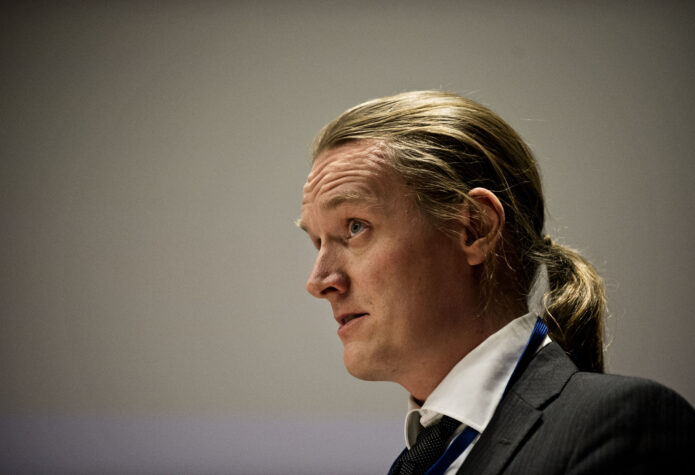
By Johan Strang*, researcher at the Centre for Nordic Studies, University of Helsinki. Photo: Benjamin Suomela
In an era when the European project is surrounded by rising scepticism, the Nordic countries are arousing international interest. Our politicians have realised that the Nordic welfare model is a trump card which should be utilised. But one aspect which we in the Nordic and Baltic countries are not really able to appreciate and utilise is the potential of the Nordic cooperation model.
The Nordic cooperation is a unique example of flexible, yet ambitious and democratic international cooperation. The cooperation has widespread popular support of different civic organisations as well as extensive cultural cooperation. The Nordic countries have had passport exemption and a common labour market since the 1950s, which has aided the Nordic economy for dealing with various crises. In my opinion, the Nordic cooperation has the potential to become an even stronger part of the Nordic countries’ brands, but this necessitates foresight and the courage to adopt a new approach.
In 2010 the Swedish historian Gunnar Wetterberg proposed that the Nordic countries should join together in a federal state. During the previous year the former Norwegian Minister of Foreign Affairs Thorvald Stoltenberg presented a report which has served as a manual or action plan for the Nordic defence ministries. In my book Nordic Communities*, I have argued that both the Stoltenberg report and Wetterberg’s federal state can function as models for how the Nordic cooperation can be strengthened.
Within the health sector one could allow the Stoltenberg report to inspire joint purchasing of both technology and medicine for joint research and training of staff, and for extended division of roles in terms of specialised health services. And many of the issues would seem very different if we dared to widen our perspective from the national narrow outlook and view the Nordic countries from the federal state perspective of Wetterberg.
Today, the Nordic and Baltic railway networks need to be thoroughly updated. If we viewed this from a federal state perspective, the first investment would probably be linking Oslo-Gothenburg-Malmö-Copenhagen by a high-speed train, and another high speed train from Tallinn through Riga and Kaunas or Vilnius to Warsaw.
Another area where the federal state perspective could have many benefits is energy. Successful efforts have already been made through the Nordic electricity exchange Nord Pool, but we should try to develop the common Nordic and Baltic electricity market to also cover retail trade. It is also important to make joint investments in innovations for green technology, smart electricity supply networks, and other areas where the Nordic and Baltic countries have a competitive edge.
On their own the Nordic and Baltic countries are often too small for an innovation to be financially beneficial. But if we invested in creating common standards and solutions then new innovations would have better conditions for surviving.
Nordic solutions also have a greater chance of a breakthrough and becoming standard at a European or global level. An important example from our recent history is the cooperation in the initial years of mobile telephony. While in many other places there was a set national approach, the Nordic countries developed a common standard, the NMT (Nordic Mobile Telephony) at an early stage, which soon also applied in most European countries. They were also quick to develop principles for roaming. All this was significant for the success of Nordic mobile companies during these years.
The question is what could be the NMT of tomorrow? NIB has an important task of funding projects so that the Nordic and Baltic countries can function as a laboratory for the development of cross-border activities.
In an era when great scepticism has emerged against globalisation and the international cooperation in general and the European integration in particular, the Nordic countries and the Nordic-Baltic cooperation have a unique opportunity of proving to Europe and the world that international cooperation has a future. The Nordic cooperation model is a strong brand which we should utilise and develop further.
* Johan Strang’s book Nordic Communities—a vision for the future is available here.