Vice-Minister: No more energy islands in the EU by 2015
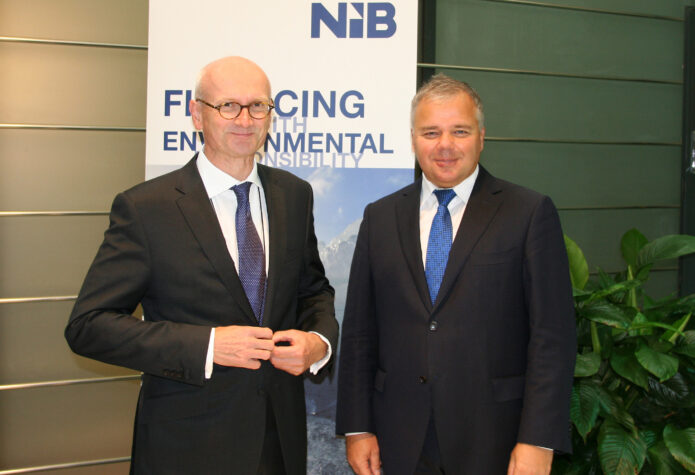
In early September, NIB hosted a seminar on the implementation of the Baltic Energy Market Interconnection Plan (BEMIP) and elimination of energy islands in Europe. The Baltic countries are typically seen as one of the most striking examples of such islands. The event was arranged by Lithuania, which currently holds the EU presidency, and featured a number of prominent speakers from academia, governments and the European Commission.
NIB Newsletter interviewed one of the seminar speakers, Lithuania’s Vice-Minister of Energy Aleksandras Spruogis, who gave an outline of the challenges his country is dealing with in the energy sector.
The implementation of the EU internal energy market is one of the priorities for Lithuania’s EU presidency. What is the status of this process?
“The EU’s internal energy market is to be completed by the end of 2014. This is the goal for the EU and the essential agenda for our current work. During Lithuania’s EU presidency we need to assess the current progress, our achievements and future actions on the EU level, which are all crucial for the completion of the EU internal energy market. The diversification of the routes and sources as well as the implementation of energy infrastructure are at the core of the completion of the EU internal energy market. By infrastructure I mean power plants, interconnections, electricity grids, LNG terminals, gas mains, etc. BEMIP is a good example of how we are solving the issue of energy islands in Europe. Lithuania together with other Baltic countries is an energy island. Lithuania imports 60–70% of its electricity and is fully dependent on a single gas supplier. This is unsatisfactory from the point of view of energy supply security. All the measures we are discussing, including the power interconnections with the Nordic region and Poland, the LNG terminal, the future gas pipeline to Poland, will help us to diversify and to create a functioning energy market.”
What does an internal energy market mean in practice?
“We are talking about a common internal energy market in Europe. Infrastructure is of course necessary, but this is only one step. Another step towards a common market is agreeing on common rules. Even speaking about renewables, practice varies a lot from one country to another. Subsidies that some countries apply may not always ensure efficiency and competitiveness of the economies. A common market requires synchronising the rules, which is of course a challenge. Even after the process of completion of the internal energy market—which will hopefully be over by the end of next year—we’ll still have energy islands in Europe. The heads of states of the EU have agreed that there should be no energy islands in the EU after 2015. Infrastructure and market rules are two sides of the same coin—a functioning energy market.”
Lithuania has already joined Nord Pool Spot, a joint power exchange for North European countries. What has been the economic effect of this?
“Lithuanian joined Nord Pool Spot in 2012. It has its positive economic effect on prices in Lithuania. I believe the Lithuanian electricity market, both suppliers and consumers, can only benefit from liberalisation. This is again a method of diversification. Once the NordBalt energy link between Lithuania and Sweden is operational, the capacity of the market will triple. The construction of the link is proceeding according to the timetable and we are planning for it to be launched by the end of 2015. A similar situation exists with the LitPol Link project between Lithuania and Poland. The first 500 MW part of the LitPol Link project will be implemented at the end of 2015. The second part of the project, with a total capacity of 1000 MW, will follow until 2020.”
Lithuania is targeting 23% of all energy production from renewable sources by the year 2020. How realistic is this?
“I think we will even exceed this target easily. We have very good potential in using biomass, which is the main priority in our strategy for the heating sector. Even now biomass makes up 27% of heating production. By 2020, its share will reach 60%. Biomass will gradually replace natural gas and other fossil fuels currently used in heating. Waste is another untapped opportunity. More than 80% of all waste is being dumped on landfills. We want to cut this figure to 10%, while the rest will be recycled and used as fuel for energy production. These are mostly state investments financed from the national budget and EU funds.”
What do you think the role of international financial institutions should be in the implementation of the efforts like BEMIP and the internal energy market?
“First of all, we greatly appreciate investments in infrastructure. After agreeing on the infrastructure plans and projects, such as BEMIP and the currently developing EU-wide list of Projects of Common Interest, the implementation will be a key challenge. While dealing with implementation, the financing of projects is a critical issue. This is absolutely essential for the survival of a country like ours and it is of great importance for the whole of Europe. NIB, the EIB and the EBRD provide long-term and transparent financing. The international financial institutions make infrastructure investments feasible for us. I see these institutions as a guarantee that the EU energy market will function effectively with no energy islands in Europe.”