Time to implement EU Baltic Sea strategy
In late October 2009, the EU member countries signed an agreement launching a common strategy for the Baltic Sea region adopted by the European Council.
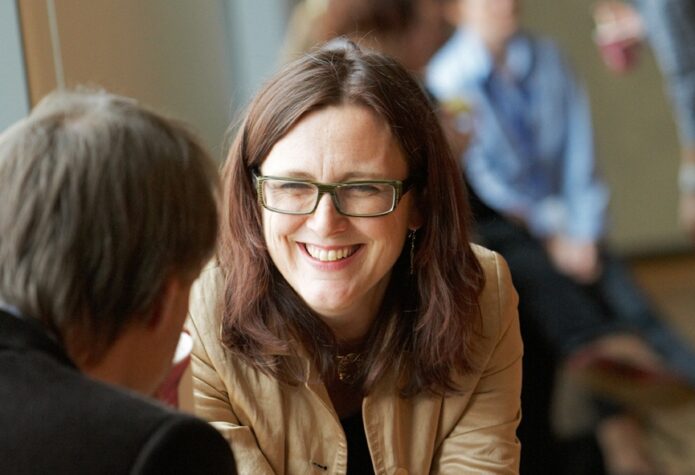
The EU Strategy for the Baltic Sea Region was one of the Swedish Presidency’s priority issues. The NIB Newsletter has contacted Sweden’s Minister for EU Affairs Cecilia Malmström for a comment on what’s next after the strategy has been adopted.
“The strategy has crucial significance for the region’s environment, prosperity and competitiveness in the future,” says Ms Malmström. “I am very pleased that the whole of the EU is behind this strategy. Now we can work together much more clearly to strengthen the Baltic Sea region environmentally, but also to improve growth and coordination on security issues.”
How do we ensure the strategy is a success?
“The next task is to make the strategy work in practice. Three things are important if we are going to succeed. One is to establish a yearly forum where the action plan can be developed and where stakeholders can participate. The other is to put a so called high-level group in place, where the EU-member countries can discuss the coordination of the strategy,” says Sweden’s Minister for EU Affairs.
“But the most important prerequisite of all when it comes to the implementation of the strategy is the political will of the countries themselves. Without that commitment the strategy won’t function,” she adds.
The strategy includes an action plan of 80 flagship projects. Among those: reducing the use of fertilisers in agriculture and phosphates in washing powder in order to reduce eutrophication of the sea. Other projects include reducing the risk of oil leaks by creating sea “motorways” or coordinating maritime surveillance. These are examples of projects within the environmental pillar of the strategy. The other pillars have also been provided with a variety of interesting initiatives.
“I hope that we will soon see tangible results of the work on the Baltic Sea Strategy. It is a matter of the countries carrying out the plans they have committed to deliver, and also of the EU continuing its regular monitoring of how the strategy is followed up”, says Ms Malmström.
The strategy means that the EU will support implementation of the HELCOM Baltic Sea Action Plan (BSAP). This strengthens the chances of EU countries meeting their HELCOM commitments.
NIB and the Nordic Environment Finance Corporation-NEFCO have set up a BSAP fund to speed up the implementation of the plan. Sweden has committed SEK 45 million (EUR 4 million) to the fund and Finland EUR 1.6 million.
The EU strategy for the Baltic Sea region aims at coordinating action by the EU and member countries as well as international organisations and financial institutions to promote a more balanced development of the region. The strategy has four main objectives: to improve the marine environment, enhance prosperity, make the region more accessible and attractive and improve safety and security.
At the meeting of the European Council in December, the environment ministers of the EU member countries are expected to adopt supplementary Council conclusions on the strategy, which would further strengthen its implementation.