Sweden’s Minister for Finance: At 50, NIB continues to deliver on its core mission
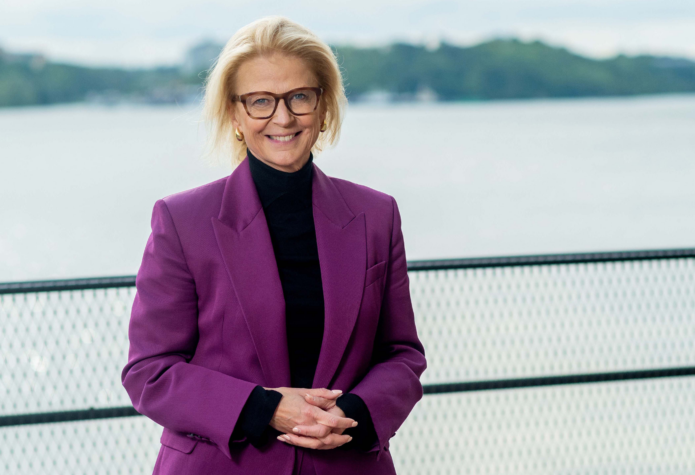
In this interview, Elisabeth Svantesson, Sweden’s Minister for Finance and Chair of NIB’s Board of Governors, reflects on the Nordic Investment Bank’s role amid shifting geopolitical and economic conditions.
In 2025, NIB delivered strong operational results and continued to adapt its mission to support productivity, environmental sustainability and regional resilience.
In 2025, NIB disbursed EUR 3,891 million (EUR 4,353 million in 2024) in new financing. Net interest income was EUR 349 million (EUR 332 million) and net profit EUR 287 million (EUR 256 million).
At its annual meeting on 25 March, the Board of Governors approved the Bank’s 2025 annual results and a dividend payment of EUR 86 million to its Nordic and Baltic member countries.
The year 2026 will mark the 50th anniversary of NIB’s start of operations. It is time to reflect on the past and build for the future. The celebrations will culminate in September, when NIB’s stakeholders gather in Helsinki. In this context, NIB is also expected to launch the outcome of its 2026 strategy review.
As Chair of NIB’s Board of Governors, what did you most value in NIB’s contribution in 2025?
In 2025, the Nordic Investment Bank has brought clear results both in terms of impact and financial return. In a challenging global context, the NIB continued to deliver on its core mission: financing that strengthens long-term productivity and the green transition in the Nordic-Baltic region, while also responding to a more demanding security environment.
During the year, NIB also took an important step by disbursing its first defence related loans under the updated sustainability policy. This reflects the owners’ priorities in a changing security landscape and a shared Nordic-Baltic commitment to strengthening regional resilience.
NIB’s strong financial performance is an enabler to be an anchor of stability in the current circumstances with the continued global conflicts and uncertainties.
How do you view NIB’s role in the current geopolitical and economic environment?
NIB’s role is increasingly important as our region adapts to a changed security situation and higher requirements for resilience. The owners benefit from an institution that can help accelerate necessary defence investments, which also support long-term sustainable growth and strengthen the foundations of our economies.
The Board of Governors took already action in this regard when it invited the Bank to focus more on resilience in its Tallinn meeting back in March 2024. Now we see that the required policy changes have been made and that the Bank is delivering on that front. While having adapted its sustainability framework to enable increased defence-related financing, the Bank should continue its financing to improve productivity and support environmental progress. The guiding principle should remain unchanged: supporting investments that strengthen our societies, while maintaining high standards and a responsible risk approach.
The Bank’s strong credit standing, including its AAA/Aaa rating, is central here to ensure that NIB remains a trusted and effective financing partner.
As NIB marks 50 years of operations and reviews its 2026 strategy, what do you see as the key priorities for the Bank going forward?
With 2026 marking 50 years since the start of operations, the strategy review is a timely opportunity to ensure that NIB remains focused on what its owners need most.
Key priorities should include strengthening resilience and security, accelerating the green transition, particularly in energy systems, supporting productivity and competitiveness through long-term growth investments, and maintaining robust financial fundamentals.
The overarching objective should be continuity in delivering on the mission, combined with the capacity to operate effectively in a more complex environment.