Speeding up infrastructure investments
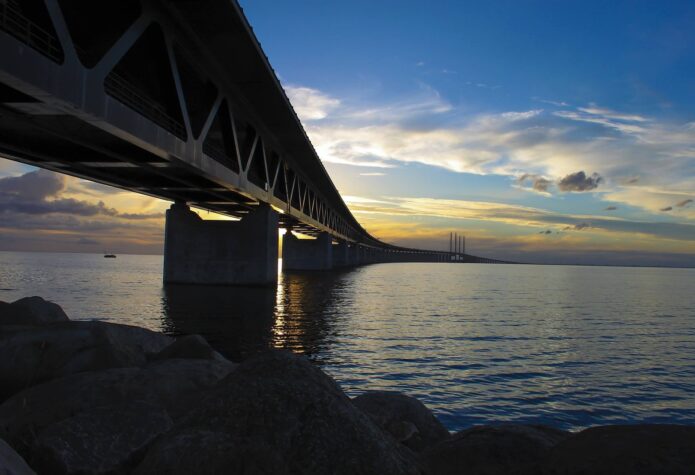
As Sweden opens up to public-private partnerships to invest in modern and environment-friendly infrastructure, NIB takes on the challenge.
“Although the government has made commitments on an unprecedented scale, we admit that the needs are bigger than what the state is able to meet by itself. On this basis we find it important to offer the possibility to those who wish to engage in co-financing,” says Åsa Torstensson, Minister of Communications in the Swedish Ministry of Enterprise, Energy and Communications.
“By doing so we create a win-win situation in which we can handle more urgent infrastructure projects than we would have been able to carry out on our own.”
Transport, logistics and communications is one of NIB’s focus sectors.
“Increased focus on this sector brings us closer to our Swedish owners, the country’s infrastructure and the industry behind it. NIB is involved in PPPs in Denmark, Finland and Norway. Why not in our biggest member country,” says Ulf Westergård, Senior Manager of Origination at NIB.
In the debate on financing expensive infrastructure projects, Westergård says it is important not to stare blindly at the prices. Time is also an important aspect.
“With NIB involvement, the projects can be initiated right away – and not in ten years’ time,” he says.
He adds that the Bank is interested in various financing solutions for infrastructure projects and that he is currently discussing these with different parties, such as the Swedish Transport Administration, municipalities and regions and private sponsors and companies.
One initiative discussed is to assist municipalities with pre-financing projects approved by the government. In this way, NIB can provide the long-term financing to assist municipalities in quick implementation of these projects. Low consumption of energy puts railway transport on the winner’s podium in the competition for reduced CO2 emission.
In the past year, NIB has cooperated with the Swedish Rail Administration to spot relevant railway projects. Two major investments which have been discussed are new high-speed trains and “Norrbotniabanan”. NIB has already financed railway projects in SJ and Green Cargo.
“Co-financing is only possible if there is an interest from more parties in building new infrastructure. We appreciate NIB’s interest in these projects,” says Minoo Akhtarzand, former Director-General of the Swedish Rail Administration (currently Director-General at the Ministry of Enterprise, Energy and Communications).
The Swedish railway market has expanded rapidly in the last decade and railway travel has increased significantly in recent years. Growing environmental awareness among consumers pushes companies to find environmentally friendly ways to transport goods and encourages politicians to prioritise railway investments.
“The increased interest in the railway is significant. Passenger traffic has risen by about 65% and freight traffic by about 21% in the past 20 years,” Akhtarzand continues, and adds:
“While building big infrastructure projects for the future, we have to maintain the current structure. It takes a long time for new projects to be finalised, so we always have to maintain and reinvest in the current system in order to handle increased needs.”
Infrastructure investments are an important part of the political debate in preparation for Sweden’s governmental elections in the autumn of 2010. Access to a wider job market is one important reason for directing resources towards infrastructure investments, according to Torstensson.
“Functioning communications is necessary to get people to work in a growing number of companies around the country”, says Akhtarzand.
“With good and reliable communications we give people a possibility to commute longer distances, which gives people a chance of remaining in their home town, but still having access to exciting job opportunities,” she explains.