Sanitised sewage offers relief for Baltic Sea
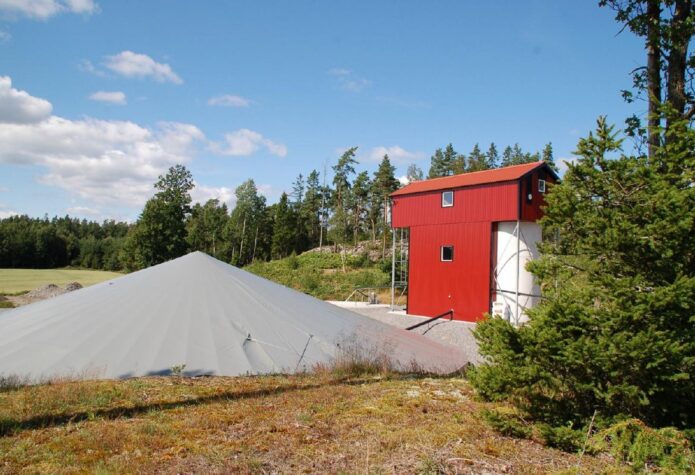
A grant from the Baltic Sea Action Plan Fund to a pilot treatment facility sanitising housing sewage into nutritional farm fertilisers provides a much needed catalyst for raising investor interest to reduce phosphorus and nitrogen discharges to the Baltic Sea.
Started in August, the Telge Nät treatment plant in Södertälje, Sweden, receives household sewage from almost 700 private septic tanks into its processing cisterns.
“The waste is treated with heat and urea to kill undesirable microorganisms, and the end result is valuable manure fully accepted by the Federation of Swedish farmers,” says product manager Anna Calo at Telge Nät AB.
In addition to reducing scarce global phosphorus resources in chemical fertilisers, the recyclable sewage system means new areas in the Södertälje municipality, located just outside Stockholm, could be opened for settlement.
The new facility is part of the Swedish Government’s plan to recycle 60% of phosphorus from sewage back to productive agricultural land by 2015.
“I would like to have facilities like this in every city and every community around the whole Baltic Sea,” Swedish Minister for the Environment Lena Ek said at the inauguration of the facility.
That would definitively reduce the eutrophication and pollution of the plagued Baltic Sea, as indicated by excessive algal blooms, dead sea-beds, and depletion of fish stocks.
HELCOM spearheads good ecological initiatives
According to the Baltic Marine Environment Protection Commission, usually known as the Helsinki Commission (HELCOM), failure to react now will affect vital resources for the future economic prosperity of the whole region and cost substantially more than the cost of action.
In 2007, it adopted a Baltic Sea Action Plan (BSAP) to restore the good ecological status of the Baltic marine environment by 2021.
”We have a very structured action plan that steers both the government’s work and sets the framework for what our municipalities can do and how we cooperate with other HELCOM members,” Ek says.
Members of HELCOM are Denmark, Estonia, the European Union, Finland, Germany, Latvia, Lithuania, Poland, Russia and Sweden.
”The Baltic Sea action plan is extremely concrete, perhaps the world’s most transboundary environmental strategy, so it’s all about making it happen,” says Ek.
Since 2009, environmental projects supporting the BASP have been able to seek grants from the BSAP Fund managed by NIB and the Nordic Environment Finance Corporation NEFCO. Having almost granted total fund contributions of EUR 9 million from Sweden and EUR 2 million from Finland on 25 projects, the fund is currently being evaluated by an external consultant on whether it should continue with fresh means or not.
 |
Minister Ek (Centre Party) says there is still a will in Sweden to continue the BSAP Fund, as evident in ongoing budget negotiations.
”Yes, naturally there is. At the same time we’re also working with the question of financing Baltic Sea projects within the EU system framework,” says Ek.
The Danish EU Chairmanship worked hard to address the Baltic Sea questions in negotiations on the EU’s Multiannual Financial Framework 2014–2020.
“That is also an important procedure as much needs to be done in order to save the Baltic Sea,” Ek.
Baltic Sea Action Plan Fund
The BSAP Fund started in 2009 by providing grants for technical assistance to projects that support the implementation of the HELCOM Baltic Sea Action Plan.
Recipients eligible for financing through the BSAP Fund include both public and private entities operating in the agricultural and wastewater treatment sectors, shipping and ports, as well as those working to reduce hazardous waste in the Baltic Sea catchment area.
A key purpose of the fund is to facilitate and speed up the preparation of bankable projects.
Sweden has committed SEK 90 million (EUR 9 million) to the BSAP Fund and Finland EUR 2 million.
Funds have now been used for grant financing of about 35 projects of the following:
• Project preparation and development, including feasibility studies, development of business ideas, and cash-flow models
• Technical assistance for institutional support, that is, training and support needed for project preparation, development and implementation
• Measures that improve efficiency and quality in project implementation (e.g. the acquisition of equipment for demonstration purposes).