Research: societies willing to invest in saving the Baltic Sea
A recent report by a Baltic Sea research network shows that people living around the Baltic Sea are willing to take on the cost of fulfilling the targets set up in HELCOM’s Baltic Sea Action Plan (2007).
“The Baltic Sea—Our Common Treasure. Economics of Saving the Sea”, a report produced by the Swedish-based international research network BalticSTERN and commissioned by the Swedish Agency for Marine and Water Management, reveals that people living in the countries surrounding the Baltic Sea are willing to allot as much as EUR 3.8 billion every year to see the environmental status of the sea improved.
BalticSTERN has conducted the first ever large-scale study to include all nine Baltic Sea countries, estimating the costs and benefits of reducing eutrophication as set according to the HELCOM Baltic Sea Action Plan (BSAP). In order to estimate the value of the BSAP targets for nutrient reduction, BalticSTERN polled 10,000 people, asking them about the usage of the water system and their attitudes towards the current status of the environment, as well as how much each of them would be willing to pay for reaching the BSAP targets.
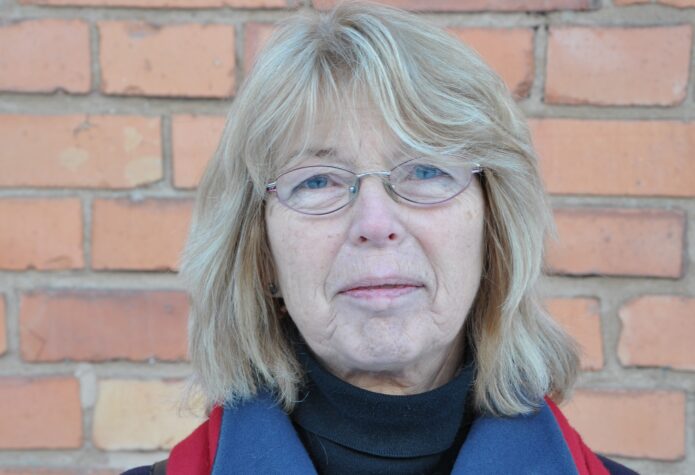
“The result was overwhelming: people around the Baltic Sea are willing to invest almost four billion euros in saving the Baltic Sea,” says Siv Ericsdotter, Head of the BalticSTERN Secretariat.
“The people in the Baltic Sea region obviously share a clear understanding that the Baltic Sea is dire and that the environmental status must be improved.”
The survey results emphasise the importance of the Baltic Sea for people, as more than 80% of the people living in the littoral countries have spent leisure time at the sea walking, swimming, cruising, boating or fishing. They are worried about the marine environment—marine litter, oil spills and heavy metal contamination, algal blooms and damage to flora and fauna.
Recent modelling shows that climate change will only aggravate the impact of eutrophication, mostly caused by agricultural discharges, wastewater and traffic both at sea and on land. Ms Ericsdotter continues:
“In case of non-action in the so-called Business-As-Usual (BAU) scenario, only two of the basins—the Gulf of Bothnia and Kattegat—would be in an acceptable state in 2050. The rest of the sea will be in a poor state. Worst would the situation be in Baltic Proper with very murky water, vast areas of blue-green algae blooms every summer, constant oxygen shortage in sea bottoms over large areas and underwater meadows no longer suitable for fish spawning.”
BalticSTERN results suggest the BSAP targets can be reached by cutting fertilisers in farming, investing in wetlands, introducing a ban on phosphorus in detergents, reducing nitrogen leakages and nutrient loads from wastewater treatment plants.
“The BalticSTERN report shows that measures to obtain the BSAP targets exist. The challenge is to introduce policy instruments to speed up cost-effective allocation of the measures necessary for reaching the targets. International financial institutions have a very important role to provide the financing needed in order to implement these measures,” concludes Ms Ericsdotter.
The full report can be found here.