Redesigning Norway’s hydropower inside the mountain
By Oliver Mølvang Hermansen, Associate Communications Officer, NIB
Fog hangs over a rocky landscape dusted with snow as I approach the Svean hydropower plant on a cold morning just outside Trondheim in mid-Norway. Statkraft is rebuilding the facility by moving the new station inside the mountain, aiming to secure production and improve efficiency for the years ahead.
By the time I arrive, the fog has lifted from the dull sleepy morning hours, and the sky has turned crystal clear. The air is mint-cool and fresh.
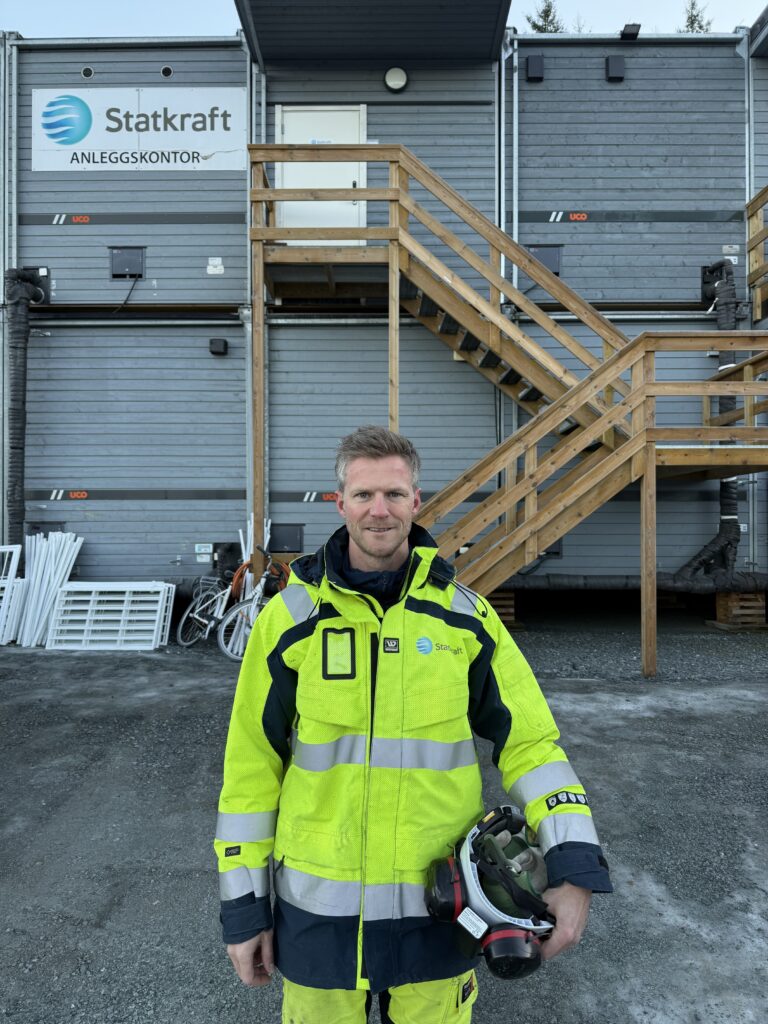
In front of me is a stack of temporary cabins that serves as the site office. This is where I meet Carl Martin Klæth, Project Manager at Statkraft. He is in charge of the upgrade at the Svean hydropower plant and will give me a tour of the site.
Securing hydropower for the next decades
Statkraft, Europe’s largest producer of renewable energy, is redesigning a hydropower facility to optimise its lifespan and energy production capacity. Besides hydropower, the company generates wind power, solar power and gas power.
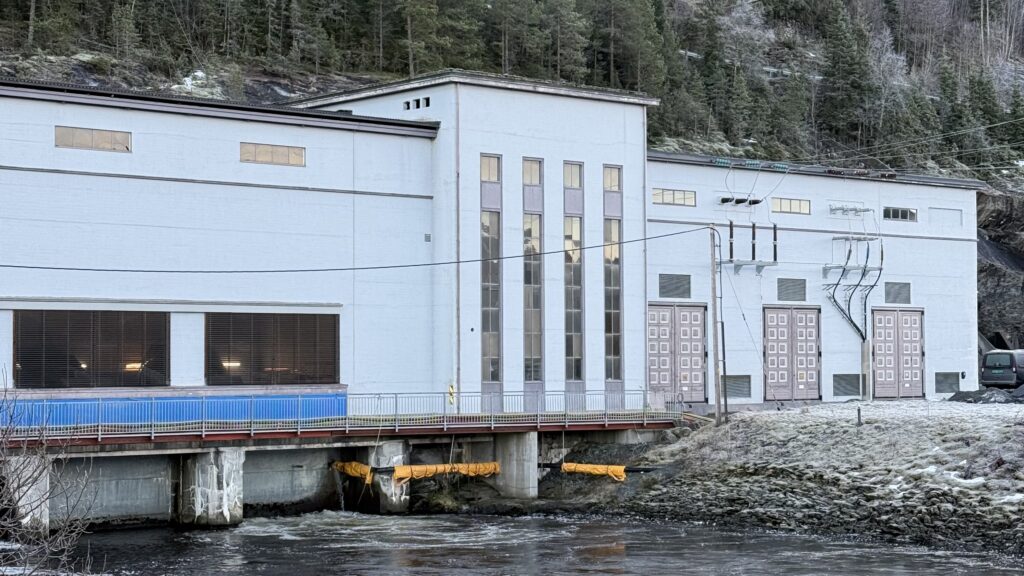
The new Svean hydropower plant in Klæbu, Trøndelag, is an upgrade of an established energy facility. The new station is being built inside the mountain while the existing plant from 1939 remains in operation.
Construction began in January 2025 and is planned for completion in 2028, but the new plant will be ready for trial operation at the end of 2027.
The upgraded underground plant will feature three modern 12 MW Francis turbines, 36 MW in total, and expanded underground infrastructure, including 1.6 kilometres of new tunnels. By reusing the original 3-kilometre transfer tunnel from Selbusjøen and adding a new intake, the project is designed to improve both efficiency and output.
Annual production is expected to increase from about 120 GWh to approximately 130 GWh, which is enough to power around 6,000 households in Trøndelag, depending on consumption.
A plant inside the mountain
“The Svean project is about redesigning a power plant that is old and ready to be decommissioned. So we need to build a new power plant to secure production,” Carl Martin says.
The project focuses on rebuilding the power station, as the existing plant is nearing the end of its lifespan and has begun to show structural problems. As part of the upgrade, the old plant and parts of the intake will be demolished. The area will then be restored with new vegetation.
The investment is expected to extend the lifetime of existing assets by more than 50 years.
Construction site tour into the tunnels
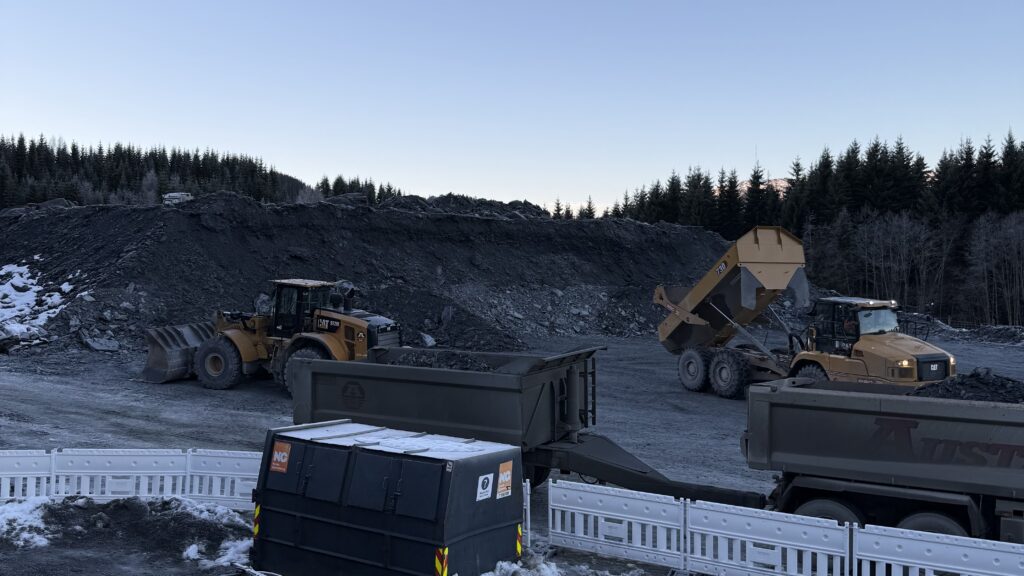
A loud and destructive noise suddenly interrupts the peaceful mountain terrain. A big truckload of exploded bedrock is being emptied in a large pile of stone mass. It is evident that I am in the middle of a dusty construction site, alive with the chaos of a busy intersection.
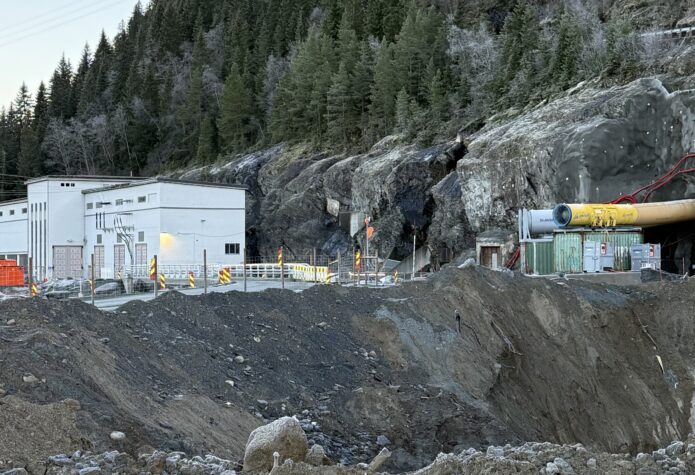
Not long afterwards we are standing dressed in safety gear in front of the current hydropower plant, which was built in 1939. Consisting of three Francis turbines, this facility is currently producing 120 GWh annually, with an installed capacity of 27 MW.
This hydropower plant will soon be a memory and part of history. Next to the existing facility, I see a massive crater in the mountainside, and as I get closer a tunnel is visible.
Inside this deep tunnel is where the new hydropower facility is being built. We are walking on squishing rocks as we enter the humid bedrock. Water is dripping from parts of the ceiling, and our conversations echo through the vast walls.
“The total energy production here will be 130 gigawatt hours, and it will be approximately 10% increase of what we have in production here today, and we will also secure the production with the new facility,” says Carl Martin.
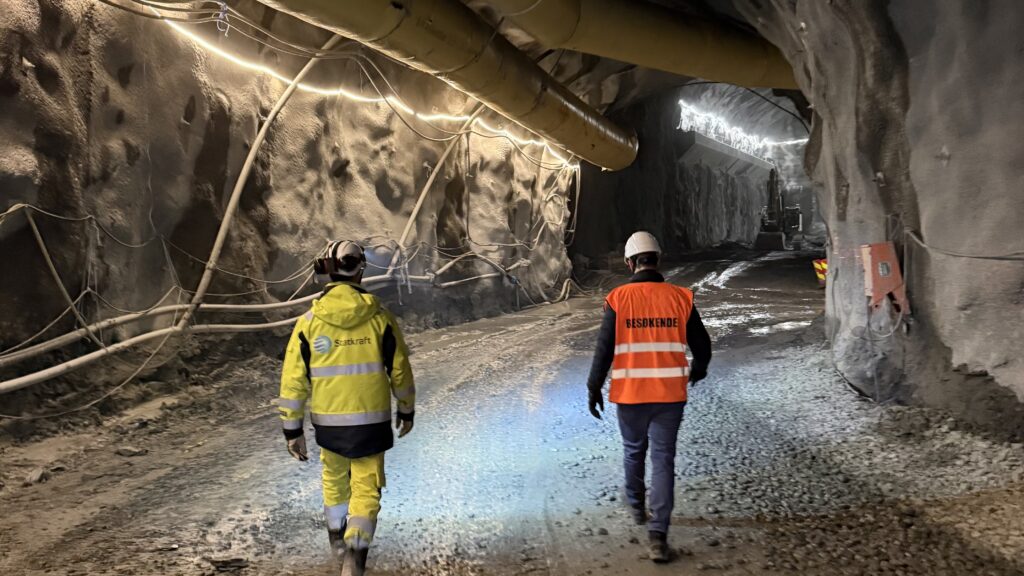
As we continue our tour in the hollow tunnel, we pass side tunnels leading to different sections, showing the complexity of this engineering work.
The science behind hydropower
How does this energy source work in practice, you may ask. Well, Carl Martin explains it like this:
“Hydropower is easy physics. You take advantage of the water falling from a higher elevation to a lower elevation, and you control the flow of the river and the water, and with that power you generate energy.”
From the lake on the other side of the mountain, the water intake flows through tunnels for three kilometres before it ends up at the three turbines 55 metres below. This is where the magic happens, and power is produced. This 55-metre drop comes from Selbusjøen, a water-regulating reservoir nearby.
An energy source built for longevity
A hydropower plant built inside a mountain is a clean energy source with a long lifespan, protected from outside disturbances such as harsh weather and security breaches.
With the raw scent of fresh earth hanging in the air, we move closer to the new hydropower construction site, where the facility is taking shape as rock is carved from the mountainside around us, and the structure is now being cast in concrete.
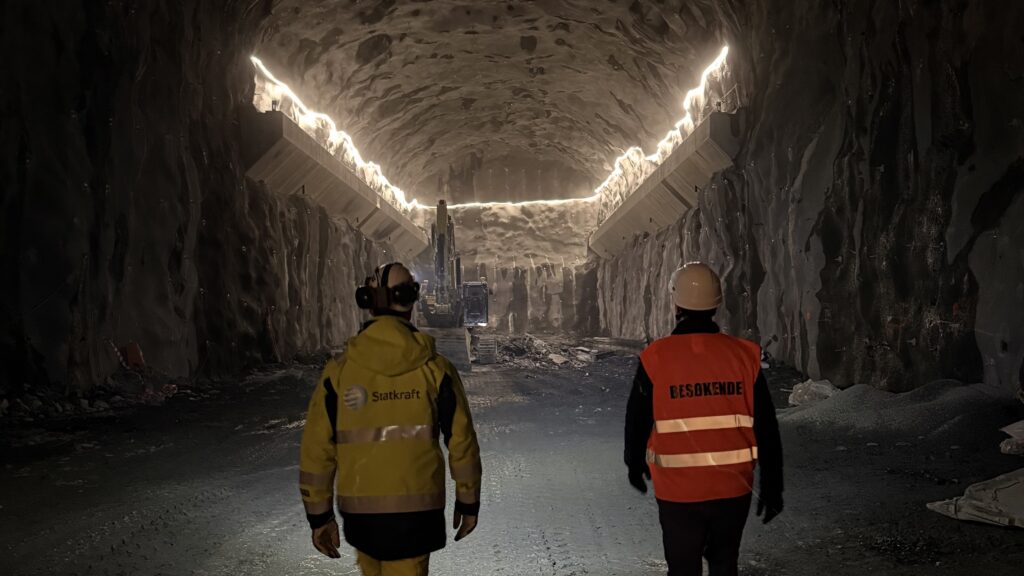
“This is an energy source that will be there for a very long time. And the old power station has been there since 1939, and we hope the new one will be as good as the old one and produce effective power for 100 years,” Carl Martin states.
For him, one of the key benefits is simple: “You don’t need to fuel this with anything. The rain and the water handle that part.” Then it is about controlling the flow through the tunnels until it ends up at the turbines.
Respect for people and the local area
When leading a project of this scale, several risks need to be considered. These are the practical challenges that can affect people and the surrounding environment, as well as energy market volatility.
“So for Statkraft, when we undertake a project like this, the first thing is always that everyone should get home without any injuries. We highlight safety, and we place a very high value on people’s health and wellbeing,” emphasises Carl Martin.
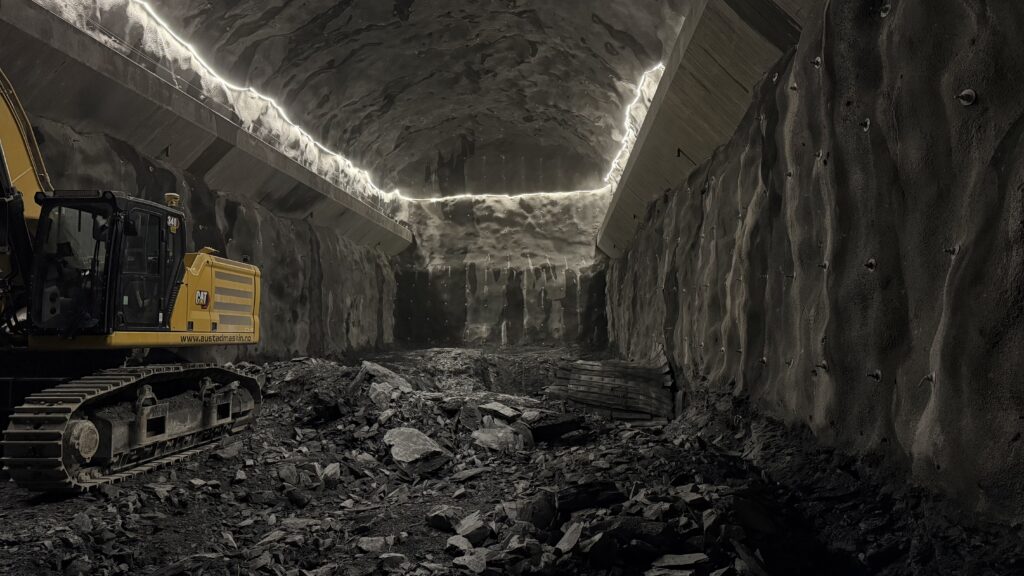
The local environment is also part of the day-to-day planning. We are close to Nidelva, a local river flowing straight through the area, and the site must handle the situation in the river and the ecological flow so the work does not harm the river.
On top of that, the site itself sets constraints: limited space; a community within the area; and geological uncertainty when building inside the mountain. Carl Martin also points to the challenging market situation early in the project, with a risk that costs could rise before contract commitments were in place.
These complexities can ultimately make or break the project’s success.
Ambitions built on resilience
With noon approaching, we walk back to the temporary office area across the frosty and slippery ground.
“The flexibility you get with hydropower is that it can act like a base load, but at the same time you can switch it on and off quickly. So it gives you a lot of flexibility, as long as stored water is available. I think flexibility is the biggest advantage of hydropower,” emphasises Carl Martin.
As wind and solar take a larger share of the energy mix, Norway and Europe increasingly rely on flexible hydropower to keep the system stable in the years ahead on the path to net-zero.