Putting a price on our future
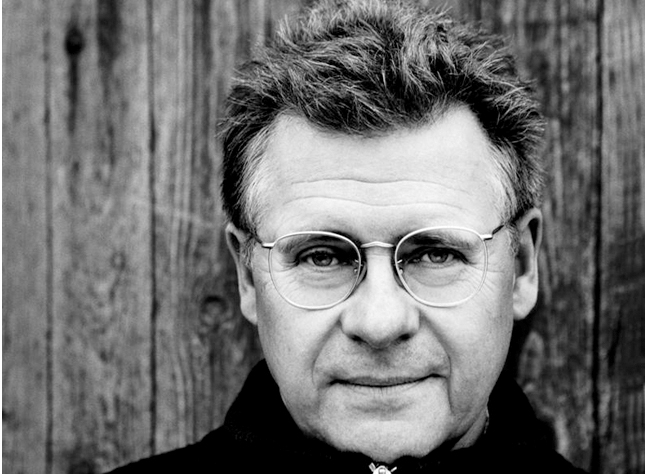
The most important weapons in the fight against the climate crisis are economic, says Klas Eklund, Sweden’s well-known climate economist, in an interview with the NIB Newsletter. He calls for a uniform price on carbon emissions worldwide and better skilled finance personnel to help build a greener economy.
Mr Eklund’s appeal to the world’s decision-makers due to gather at the UN Climate Conference (COP15) in Copenhagen in December 2009 is clear: “We need to get a global deal against climate change as soon as possible or the consequences will be fatal.”
Uncertainty and long time horizons, Mr Eklund continues, delay responses to the climate crisis. “The financial crisis has been acute and people have seen the collapse happening. The bankruptcy of the global climate, on the other hand, is a slower process. So some people still find solace by hoping in future solutions. Besides, too many politicians do not normally care about what will happen long beyond their terms,” he says.
Mr Eklund hopes putting a price on carbon emissions will be at the top of the delegates’ agenda at COP15.
“Instead of having one carbon tax system in China, another in the US and yet another in the EU, we should ideally have one system regulated by a global authority,” he explains.
However, the starting point for COP15 is challenging and Mr Eklund does not expect the meeting to actually reach such a conclusion. There is still no preliminary agreement on how much we should reduce emissions.
“The EU has promised to decrease its emissions by 20%, based on 1990 levels, by 2020, while the US has promised nothing more than a net zero per cent decrease. China, however, is demanding that the rich countries decrease emissions by 40% before they expect China and other poorer nations to follow,” Mr Eklund says, highlighting the gap of 40 percentage points between the two biggest polluters in the world.
The economist raises two key prerequisites that should form the basis of a successful climate conference: worldwide scope and carbon pricing. Emissions should ideally have the same price everywhere to avoid carbon leakage from rich nations’ moving their “dirty industries” to poorer nations with lower carbon taxes.
COP15 would need to look at climate aid and global finance deals, as a standardised price for carbon emissions would be unfair to the poor countries. Either way, COP15 must be both deeper and broader than the Kyoto Protocol, the previous effort to reach a worldwide agreement against global warming.
Hopenhagen
Copenhagen, upcoming host to the world’s biggest climate conference, has nicknamed itself Hopenhagen and proudly declares itself “the most important city in the world in 2009” in connection to the event. Mr Eklund is concerned about the concrete outcome of the meeting.
“We have to keep hopes high, but I am afraid we will merely get a skeleton deal in Copenhagen,” he remarks.
Mr Eklund recently met with Chinese officials and economists at a top-level climate seminar in Beijing and is optimistic about China’s efforts in the long run. “I see a new awareness of the threats of climate change, and also a new willingness to push for a transition to a low-carbon society. No doubt the next five-year plan will include ambitious targets for a greener China,” he says.
Mr Eklund’s colleague, Sir Nicholas Stern, author of the Stern Review on the Economics of Climate Change-who also participated in the recent seminar in China-warned earlier this year that the world cannot afford to allow COP15 to become another eternal negotiation system like the World Trade Organization.
Warmer waters and more frequent hurricanes, the increased probability and intensity of drought and heat waves, the spread of diseases and the economic consequences of the above-mentioned are some of the signs of global warming that are already starting to take their toll. Human conflicts, based on a shortage of potable water and arable land, are also expected to increase due to climate change.
Economic tools
Carbon pricing is linked to other economic tools against climate change. The more expensive it is to base production on fossil fuels, the stronger the incentive could be to invest in green technology.
“I am an economist, so I focus on price mechanisms; but putting a price on carbon should be done in combination with investments in R&D,” Mr Eklund argues. He cites the current research on Carbon Capture Systems (CCS), as a good example.
CCS meets scepticism on safety issues and for possibly prolonging the life of coal, but Mr Eklund feels there are more arguments on the plus side.
“There are poor nations that will still rely on coal for a long time, and we cannot prohibit any country from using fossil fuels. The two-degree target, the increase in global warming that most scientists agree is the maximum our Earth can handle, is much more likely to be met with CCS technology,” he points out.
Eco investments
Mr Eklund agrees when Mr Stern calls the climate crisis the biggest market failure of all time, and says that the threat of global warming provides a perfect opportunity for economists to regain some of the status they have lost due to the financial crisis.
“The International Energy Association has estimated that some USD 50 trillion needs to be invested to make the energy sector less dependent on fossil fuels during the next few decades. Financial institutions like the Nordic Investment Bank will face the huge task of channelling the investments. In addition, savings and bond trading are areas where both commercial banks and international financial institutions will be important players,” he explains.
The economist continues on the challenges in his profession: “Once there are political decisions on carbon taxes or cap-and-trade systems, we can start calculating the return on green tech projects and let our analyses affect stock markets and credits. Then economists and financial analysts should make sure that the good players are rewarded while laggards are punished with higher market rates. The financial sector can then contribute to a greener market economy.”
Mr Eklund has recently published a book on climate change, Vårt klimat (Our climate) outlining possible ways to alleviate global warming. In the book, Mr Eklund discusses another economic means of handling emissions, the Clean Development Mechanism (CDM). This is an arrangement under the Kyoto Protocol which allows net global greenhouse gas emissions to be reduced at a much lower global cost, as industrial nations can reach their targets by financing emission reduction projects in countries where costs are lower. However, in recent years, criticism against the rather cumbersome mechanism has increased.
“I believe this is one way the Nordic and Baltic regions could collaborate to cut emissions without decreasing industrial output. However, this system will only work if receiving countries put a ceiling on emissions,” Mr Eklund says.
“Growth the way we know it today-based on fossil fuels-cannot go hand in hand with a greener environment. Global warming is a sign that economic growth is not sustainable at the moment. With economic tools, like carbon pricing and CDM, and by always striving to find new and improved mechanisms, it is possible to make growth sustainable,” he concludes.