NIB to eye more deals in non-member countries
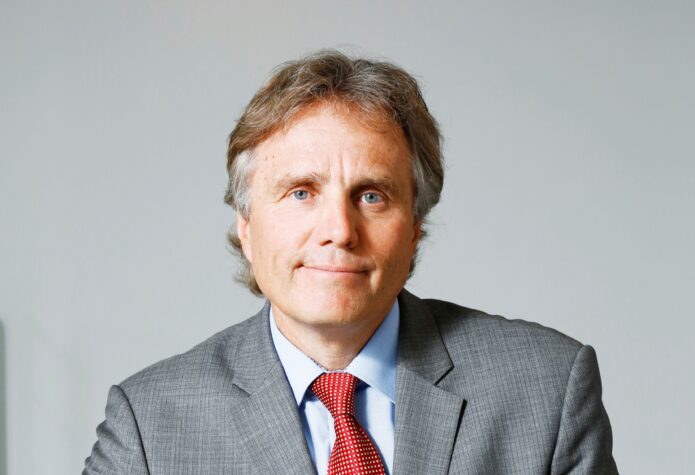
NIB is set to broaden the geographical focus of its lending outside its member countries. Projects eligible for financing will be assessed on the case-by-case basis from the point of view of the Bank’s mission fulfilment. NIB is responding to its customers’ wish for the Bank to become more involved in financing their investments outside the Nordic–Baltic region.
The NIB Newsletter asked Thomas Wrangdahl, First Vice-President and Head of Lending at NIB, to comment on the implications of this decision.
The Board of Directors has decided to increase the flexibility of NIB’s lending outside its member countries. What is the purpose of this step?
“The purpose is to improve the effectiveness of executing our mission—to improve competitiveness and the environment of the member countries. Both pillars are equally important. The environmental mandate may be even more so in the neighbouring areas affecting the Baltic Sea and the Arctic region.
If we broaden the geographical scope, the variety of projects eligible for NIB’s financing will also increase. It was natural to bring it to the table now as part of the strategy overhaul. We have been scrutinising the possibility of opening financing up to a larger number of countries for some years.”
What would be different from the current lending operations?
“We will continue to assess potential projects from the mandate fulfilment point of view to make sure they have a positive effect on competitiveness and the environment. It should not be different from our normal operations, be it in Denmark, Chile or the UK.”
In recent years, outside the Nordic–Baltic region, NIB has been financing projects in a limited number of focus countries. Should changes be expected in this aspect?
“Expanding the geographical focus of NIB’s lending operations is one of the expected outcomes, but it should not be seen as an objective. The goal is to be efficient in fulfilling the mission through supporting the internationalisation efforts of companies in our member countries. Our job is to identify the needs of our customers and support them as much as we can in their international business, boosting their competitiveness.
We will still focus on projects in countries where NIB has signed many important deals in recent years: the BRICS countries and Poland. And let’s not forget cooperation with regional IFIs, such as the Black Sea Trade and Development Bank, the Central American Bank for Economic Integration, the Development Bank of Latin America (CAF) and the Inter-American Investment Corporation.”
Will NIB expand its cooperation with other banks—local or international—in non-member countries?
“The Bank is determined to both expand and intensify cooperation with our existing partners in different countries. This is a very efficient way of financing local projects. We will also seek cooperation with other international financial institutions. We can do either by lending through them, as we do today, or by co-financing in certain cases. This would allow us to outsource parts of the project assessment process.”
Will NIB seek to sign new framework agreements with non-member countries?
“NIB has framework agreements with 40 countries in different parts of the world. These agreements, concluded over many years, even decades, recognise NIB as an international financial institution with privileges and immunities. The framework agreements allow NIB to participate in the financing of investment projects in the respective countries. The most recent framework agreement was signed with Belarus in 2010.
Having a framework agreement is a key condition for us before we start operations. We do not, however, limit ourselves to these forty. If NIB’s financing can make a difference to our customers’ investments in a country where we still do not have a framework agreement, we should consider whether it is essential to have one.”
What business activities will the Bank target in non-member countries?
“NIB’s decision is a reaction to indications from our existing and potential customers and business associations in the member countries that certain companies would welcome NIB’s involvement in financing their investments outside the Nordic–Baltic region. We have expected this and included it in our strategy. Doing business in non-member countries has obvious potential.
NIB will assess projects case by case. We will continue financing the types of business activities that we know well—telecom, renewable energy, paper & pulp, cleantech and the development of infrastructure. These are areas where companies from the Nordic–Baltic region have developed expertise and earned global recognition.”
How will this decision impact the lending operations and financial results in the years to come?
“Expanding the geographical focus will eventually lead to larger lending volumes. Some areas and countries may have higher risk profiles, and we need to assess the risks carefully before making practical steps. If we do it right, I am sure that more flexibility in non-member lending will also be rewarding from the point of view of the Bank’s financial results. We intend to restore the historical 80/20 ratio of member and non-member lending in NIB’s portfolio. Currently, the share of non-member countries is less than 20 percent. Even if the monetary and risk management considerations are very important in defining the business targets, NIB’s choice will be driven by the Bank’s mission and the quality of the projects proposed for financing.”