NIB sharpens its focus in non-member lending
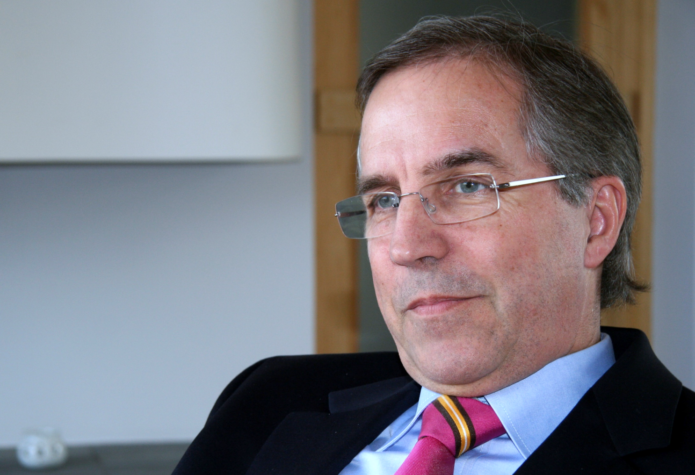
Head of Lending: The aim is to deepen relations and increase the Bank’s presence.
The main lending activities of NIB are in its eight member countries-Denmark, Estonia, Finland, Iceland, Latvia, Lithuania, Norway and Sweden. However, since the 1980s, NIB has been financing projects in non-member countries. Over the years, this has become a permanent part of the Bank’s activities, comprising approximately one fifth of its lending stock.
Recently, NIB has decided to intensify its cooperation with a limited number of non-member countries where there is a high degree of interest on the part of project participants and much potential for fulfilling NIB’s mandate. The aim is to deepen relations and increase the Bank’s presence in these countries.
Nils E. Emilsson, First Vice-President and Head of Lending at NIB, explains the background to the decision.
Why did NIB want to select focus countries?
“As an international financial institution, NIB finds it important to develop close cooperation not only with its borrowers but also with the authorities of the borrowing country in order to lay a strong foundation for a mutually beneficial relationship. By focusing its activities on a group of countries, the Bank will be able to secure continuity of operations, deepen its contacts with key counterparts and increase its level of activity.”
Which areas will be of primary interest for NIB in the future?
“The neighbouring area, that is, the Baltic Sea region including Poland and Russia, as well as Ukraine, will continue to be a priority area. In addition, the Bank will further develop its cooperation with some of the major emerging economies, the most prominent ones being Brazil, China and India. However, all cooperation framework agreements entered into with other countries will remain in force.”
Does this new focus signal a big change in NIB’s activities outside the member area?
“Actually, the change is not so big. In recent years, clearly the largest part of the lending outside the member region has already been to the focus countries. This reflects the main trend in demand and the opportunities for the Bank to identify projects that fulfil its mandate.”
Does this move reduce the level of NIB’s activity in non-member countries?
“No, in the longer term, the Bank expects activity to remain at the present level, although in the current very difficult economic situation with a scarcity of credit in the Bank’s member countries, there may be a temporary shift towards financing projects there.”
Focusing means concentrating on a limited group of countries. Why is NIB doing this now when international financing flows are declining and project owners have problems in financing their projects?
“By increasing its focus, the Bank will, in fact, be better equipped to provide financing for projects that are important to project sponsors and cooperating partners. It should be remembered that NIB, as an international financial institution, plays a different role compared to the institutions financing trade. The Bank provides financing for projects which fulfil its mandate and are of mutual interest to the borrowing countries and the Bank’s member countries.”
What do you mean by an “increased presence” in focus countries?
“As a relatively small institution, NIB is, apart from having local representatives in China, India and Russia, working from a distance. By focusing its activities, the Bank will be in a position to engage in a more fruitful dialogue with local authorities and stakeholders and to foster long-term relations. This can also be expected to provide a basis for agreeing on a more elaborate strategy framework, which is already the case in some countries of operation. “