NDEP: orchestrating environmental goodwill
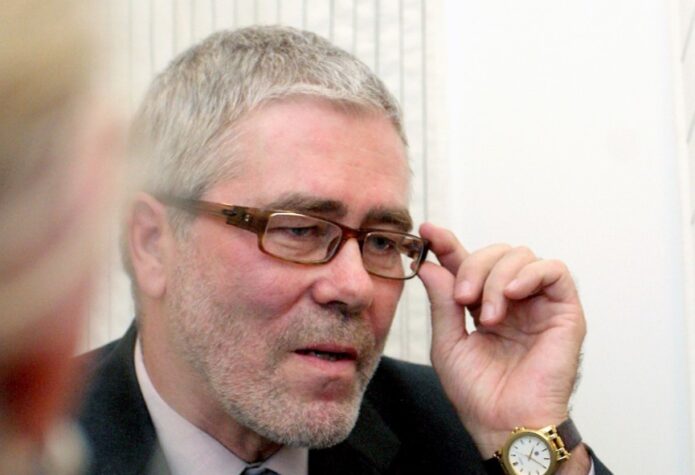
Interview with Jaakko Henttonen, NDEP Manager
The Northern Dimension Environmental Partnership (NDEP) is an umbrella framework created in 2001 for coordinating and supporting the financing of urgent environmental investments in Northwest Russia.
In spring 2009, the NDEP Fund provided a EUR 24 million grant to the Russian water and sewage utility Vodokanal of St. Petersburg for completing the so-called Neva programme, a large-scale project to build a sewage collection tunnel reducing direct discharges of wastewater from St. Petersburg waterworks into the river Neva. Soon thereafter, three international financial institutions (IFIs)—NIB, the EBRD and the EIB—signed new loan agreements with Vodokanal for financing this project, with NIB being the lead bank in structuring the package.
The NIB Newsletter has interviewed Jaakko Henttonen, NDEP Manager, on how the Partnership assesses the ongoing projects and what new efforts the NDEP would initiate in the Northern Dimension area.
This is a substantial effort by both the Russian authorities and the international financing community. What is your assessment of how the Neva programme is proceeding?
“Vodokanal of St. Petersburg has an impressive track record of investments with an international financing base and is well acquainted with the necessary procurement requirements as well as project management. Vodokanal is a leading water utility company in Russia and has been awarded numerous Russian and international awards, amongst others, for their excellent contribution to the development of the city’s engineering infrastructure, mitigating environmental impacts and raising environmental awareness. In this respect, I have full faith in the leadership of Vodokanal’s director Felix Karmazinov to meet the objectives set for the Neva Programme both time-wise and technically. The Neva programme is already under implementation and Vodokanal has so far carried out extensive works, such as the completion of the first tunnel collector, which was taken into operation in October 2008, on Vodokanal’s 150th anniversary.”
In St. Petersburg, the Neva Programme is expected to deliver 98% efficiency in wastewater treatment by 2015 by closing off 370 points of direct discharge. What more needs to be done to eliminate the threat that untreated wastewater discharge poses for the health of the Baltic Sea?
“The most acute unattended environmental hotspots in the area are in the Kaliningrad region. Kaliningrad is the last remaining major city in the Baltic Sea region with no effective wastewater treatment facilities in place. In the whole of the Northern Dimension area, significant environmental benefits will be achieved through the modernisation of smaller wastewater treatment plants and by installing chemical facilities to remove phosphorous and nitrogen from wastewater. Also as pointed out by the Baltic Marine Environment Protection Commission—HELCOM, agricultural waste is another source of pollution which needs to be recognised and addressed more radically. For this purpose, the Nordic Environmental Financial Corporation-NEFCO is currently working on a new project for reducing the pollution from poultry farms in the Leningrad Oblast to be co-financed from the NDEP.”
How do you evaluate the changes in the environmental status of the Northern Dimension area achieved since the NDEP as an umbrella framework for international cooperation started in 2001?
“St. Petersburg Southwest Wastewater Treatment plant has been a major success so far, with NIB and the EBRD as the main financiers. It helped to increase the efficiency of wastewater treatment in the city from about half to 85%. Similar projects for improved wastewater management are being carried out in other parts of Northwest Russia: the Leningrad Oblast, Novgorod, Syktyvkar, Archangelsk, Vologda. The NDEP has been gaining strength and momentum from the start. It has proved to be a true partnership for raising awareness and for delivering concrete projects to cut pollution with increased governmental involvement from all its members. Looking into the future, the NDEP partners welcome Belarus to join the Partnership. Although not directly bordering the Baltic Sea, Belarus is the fifth largest catchment area of the region with its rivers contributing to the trans-boundary pollution affecting the Baltic Sea. We expect that rehabilitation would be required at a number of wastewater treatment plants in Belarus; for instance, in Vitebsk, Grodno and Brest.”
How does the NDEP identify environmental problems that need to be addressed in a joint effort?
“The IFIs within the NDEP “family”, including the EBRD, NIB, the EIB and NEFCO, play a central role in project development. They are always on the lookout for new projects which combine environmental benefits with desirable cross-border impacts. The environmental benefits are identified right from the start as comprehensive feasibility studies need to be carried out during the project preparation. In addition, HELCOM remains an invaluable partner for identifying environmental hotspots round the Baltic Sea. The Barents Euro-Arctic Council serves a similar role for the Barents Sea region.”
What are your expectations of the Swedish EU presidency for the Northern Dimension area, in dealing with the environmental agenda of this area?
“Sweden was one of the six countries that created NDEP at the pledging conference in 2002 and, throughout the years, Sweden has been one of the strongest supporters of the Partnership. Bilaterally the Swedish International Development Agency—Sida has been involved in most NDEP projects, providing both technical and financial bilateral support. We expect the Swedish EU presidency to place the environment high on their agenda, especially in the context of the new EU Baltic Sea strategy, which provides a good framework and action plan. We expect Sweden to raise a number of NDEP issues at EU-Russia summits. Perhaps this presidency will see the Kaliningrad issues resolved positively and help us establish cooperation with Belarus. The European Commission remains the largest contributor to the NDEP and very dedicated to the environment of the Baltic Sea and the Northern Dimension as proven by its new Strategy for the Baltic Sea Region.”