Minister Carlgren: Prosperity and economic growth of the Baltic Sea region is at stake
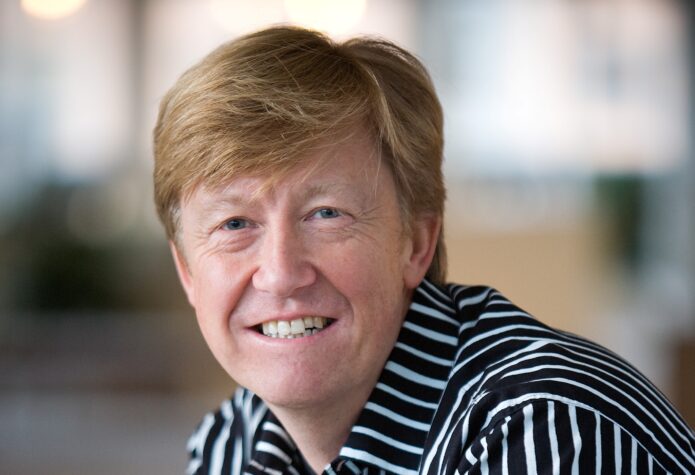
As HELCOM’s incoming chair-starting from 1 July 2010,-Sweden will ensure the implementation of the Baltic Sea Action Plan. The cost of no action is threatening. NIB can give a substantive contribution, says Andreas Carlgren, Sweden’s Minister of the Environment.
The NIB Newsletter has interviewed Mr Carlgren to reflect on his country’s commitment to a cleaner Baltic Sea.
In your speech at the Baltic Sea Action Summit in Helsinki, in February, you said that the ecological collapse of the Baltic Sea puts prosperity and economic growth at stake. Could you elaborate on this?
“The economies of the countries around the Baltic Sea have historically developed around the sea. In Sweden, 90% of the population lives within 100 kilometres of the sea, the major cities and industrial centres are located at the coast and almost every citizen of Sweden is in some way or another enjoying the sea for tourism, recreation and inspiration. The ecosystem services provided by the Baltic Sea are more important than we may think. The Swedish Environmental Protection Agency has produced a report inspired by the Stern report on Climate Change which is called “What’s in the sea for me?” which identifies 24 ecosystem services produced by the sea. Out of these, only ten are operating at optimal level, and seven are seriously degraded. This situation puts prosperity and economic growth at stake.”
What is Sweden’s commitment to the implementation of the HELCOM Baltic Sea Action Plan (BSAP) during the incoming Chairmanship of HELCOM?
“Sweden will do everything we can to ensure a successful implementation of the BSAP. At the Moscow ministerial meeting in May 2010, the BSAP will change gear from the development phase to the implementation phase. The BSAP has been very well received by many international processes and a lot of expectations have been built up. It is time for HELCOM to show the world that we are also able to deliver the implementation, and as HELCOM’s incoming chair Sweden will be at the forefront of this process. We must ensure that every country will deliver a national implementation plan. After that, we need to work with our future implementation partners to ensure that the actions in the national implementation plans are being carried out. The EU Strategy for the Baltic Sea Region, the EU Marine Directive, the follow-up of the Baltic Sea Action Summit and other processes are key playgrounds for this.”
The EU Baltic Sea strategy is very broad and concerns many key sectors. What should be the first practical steps in the implementation of the strategy this year?
“The strategy has 15 priority areas and under these about 80 flagship projects and there are also horizontal projects. The Commission, all the countries around the sea and a number of organisations have been given tasks as drivers for the different areas and projects. The work has already been started. One important issue is to align financing to the priorities of the strategy. NIB, the European Investment Bank, the European Commission and other financing institutions have an important role here.”
Sweden has doubled its contribution to the BSAP Fund administered by NIB and NEFCO for technical assistance to speed up the activities of the HELCOM Baltic Sea Action Plan. The funds are available. How do you envision the application of these funds? Who are these funds for and who would you like to encourage to use them?
“The BSAP Fund is supposed to support the development of concrete projects to implement the Baltic Sea Action Plan and should therefore be complementary to other financing or rather open the way for financing institutions by making ideas into bankable projects. The BSAP fund should give money to developing projects at a very early stage and remove bottlenecks for developing projects. The entire catchment area is eligible and we foresee projects especially as regards sewage treatment and for reducing nutrients from agriculture.”
Do you see NIB as a tool for policy-makers in the Baltic Sea countries for preventing ecological collapse?
“Of course. We see, for example, NIB’s environmental lending facility BASE with its framework of EUR 500 million as a very important and powerful instrument to help the countries with concrete actions. We really hope that we can continue to mobilise the political will to turn the trend in the Baltic Sea. There are encouraging trends regarding decreasing nutrient loads, showing clearly that investments in environmental protection do pay off. The cost of no action, however, is threatening. More has to be done and NIB can give a substantive contribution.”