Making an impact at a local level – What happens after NIB provides an on-lending loan?

Smaller municipalities and small and medium-sized enterprises (SMEs) often lack direct access to international financing. Through on-lending facilities, NIB works with local financial institutions to channel funding where it is most needed. But what happens after a loan agreement is signed?
SMEs are a vital part of the Nordic-Baltic economy, but many are too small to access financing directly from institutions such as NIB. Municipalities and municipal entities face similar challenges. To bridge this gap, NIB works through commercial banks and other financial intermediaries, which on-lend NIB funding to local businesses and smaller municipalities.
In 2025, NIB provided around EUR 375.4 million in new financing through the Financial Institutions sector, accounting for roughly 10% of the Bank’s total financing.
What happens to the money after NIB on-lends it?
Last December, NIB signed a seven-year ISK 3.5 billion (EUR 23.8 million) loan facility with Municipality Credit Iceland (MCI).
MCI is a credit institution owned by Icelandic municipalities. Its objective is to ensure access to affordable financing for municipalities and their subsidiaries. To do this, MCI borrows funds from investors and other funding sources and then lends those funds to municipal borrowers for different projects. In addition, MCI also issues bonds.
“All funds from NIB’s loans will be on-lent to projects that are aligned with NIB’s mandate. The projects will aim to enhance regional productivity, improve human capital and support long-term growth,” NIB stated in its press release announcing the loan to MCI last December.
With on-lending facilities, it isn’t always possible to disclose detailed information about individual end-beneficiaries. NIB’s Public Information Policy states:
“In the case of loan programmes with financial institutions, NIB has no contractual relationship with the ultimate beneficiary and therefore does not normally disclose any detailed project information.”
However, as also stated in the Public Information Policy, NIB acknowledges that proactive communication with stakeholders is an integral part of good business and administration. That’s why we sat down with MCI’s CEO Ottar Gudjonsson.
Since the agreement was signed, MCI has allocated nearly ISK 3.2 billion of the ISK 3.5 billion facility across five separate loans to four borrowers. The financing has primarily supported educational infrastructure projects across Iceland.
Three primary school projects have received ISK 2.2 billion, while two preschool projects have received ISK 965 million. The largest individual loan, amounting to ISK 1.5 billion, was granted for the construction of Myllubakkaskóli, an elementary school in Keflavík, approximately 50 kilometres west of Reykjavík.
The smallest individual loan amounted to ISK 100 million (approximately EUR 0.7 million).
“These investments are helping municipalities develop and improve facilities for children and young people, supporting growing communities and enhancing public services,” Gudjonsson says.

Splitting loans into smaller pieces
According to Gudjonsson, MCI’s strength lies in its relationships with small and medium-sized municipalities.
“We can take what for us is a relatively large loan and split it into smaller pieces for the smaller municipalities,” Gudjonsson says.
In the big scheme of things, MCI plays a relatively modest role in the Icelandic economy. MCI’s outstanding loans stand at ISK 200 billion, while the total Icelandic government and municipal debt and obligations stand at ISK 4.000 billion. However, for smaller municipalities, MCI plays a crucial role by lending to all its borrowers at the same rates.
Understandably, the financial market in Iceland is not huge. The country has three commercial banks.
“The loan from NIB shows that we have credibility and creditworthiness outside Iceland. It’s important that the local market sees on occasions that MCI can raise external funding.”
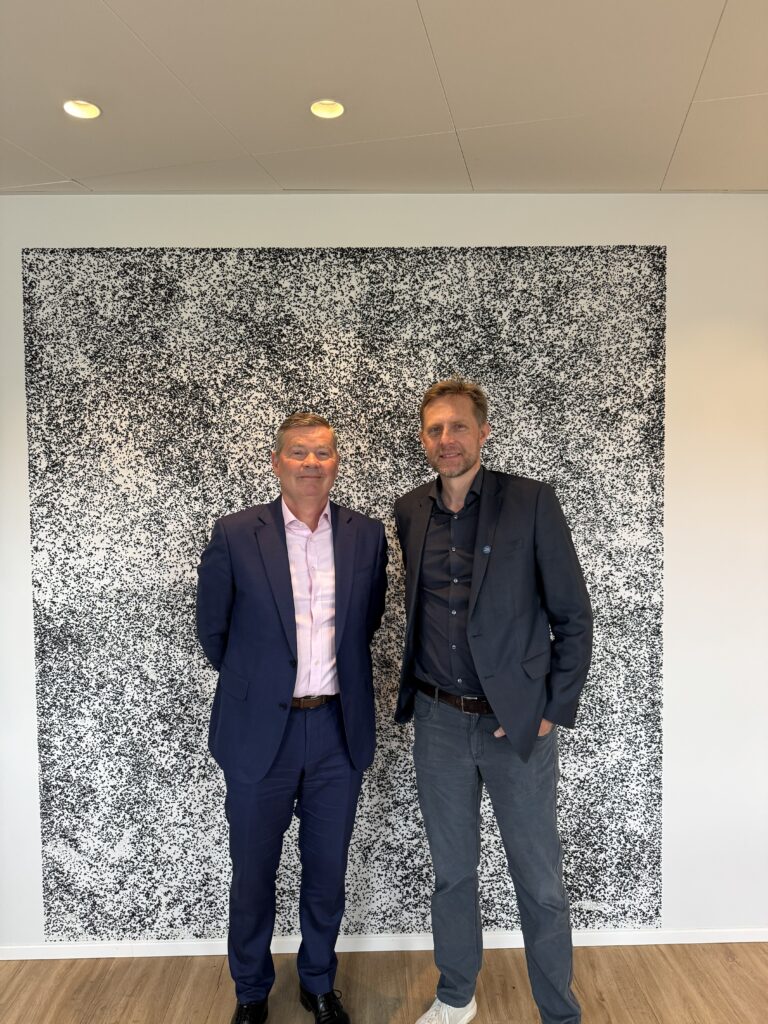
“Our key priority is to lower the spread of our funding”
In recent years, MCI has financed schools, daycare centres, district heating systems, waste management projects and sports facilities, for example. So far in 2026, the largest share of MCI’s financing has been related to refinancing existing debt and instalments.
Excluding refinancing, educational facilities (46%) continue to be among the most significant investment areas. Primary schools account for 16% of lending, and preschools for 10%. Sports facilities have also represented a significant share of lending, accounting for 15%.
Other sectors financed during the year include district heating systems (6%), waste management projects (3%), social housing (2%), road construction (2%) and harbour developments (1%).
Overall, demand is strongest for investments that maintain and improve essential municipal infrastructure.
“Our key priority is to lower the spread of our funding to the level of local government bonds in Iceland. We have focused on this in the past, but it’s something we must constantly look at,” Gudjonsson says.