Lower return, new borrowing opportunities on sinking yields
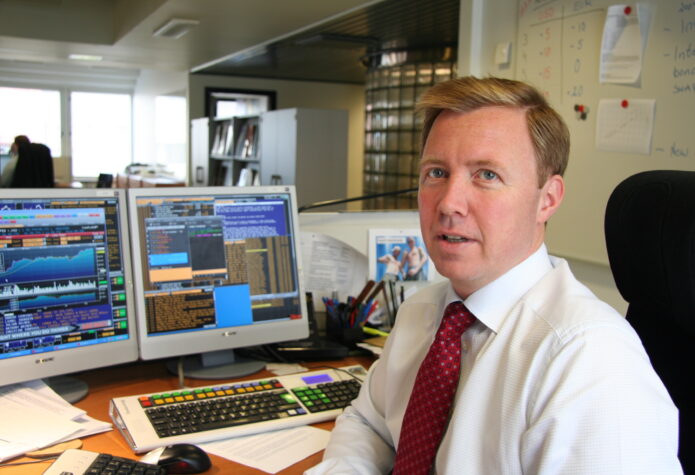
Long-term government yields in the financial markets have bottomed to levels last seen in the 1940s. Jón Thorsteinsson, Head of Own Capital Management at NIB, explains how this development affects the Bank and its borrowers.
The short-term rates have been very low for a while now following aggressive rate cuts by most central banks in the developed world.
“This was a reaction to the recent financial market crises. Cutting the rates along with other measures helped stabilise the financial system and supported growth globally,” says Mr Thorsteinsson.
Even if global growth has somewhat recovered, some signs that the recovery is faltering has ignited worries of future growth and lowered the inflation expectations of the market. Mr Thorsteinsson continues:
“These gloomy expectations have grown during this year. They have pushed down the long-term government yields on the best-rated countries to levels last seen in the 1940s.”
NIB’s equity and reserves are invested in its EUR-denominated Own Capital Portfolio, which consists of government bonds as well as other highly rated securities.
Mr Thorsteinsson says that for NIB the extremely low yields on government bonds will turn into a lower net interest income to be earned on this portfolio.
“The effect has been and continues to be gradual as maturing investments with high yield are replaced with low yielding investments. The effect will, however, last for some time, even after yields start rising again,” he continues.
As the net interest income of this portfolio is part of the Bank’s total interest income, the Banks’ total profit will be affected going forward.
Speaking about how the current market situation affects NIB’s customers, Mr Thorsteinsson points to the importance of short-term fixing rates and longer-term swap rates, as well as the margin applied to those rates.
The short-term fixing rates of the major borrowing currencies have decreased considerably as a result of the central banks’ crisis-blocking actions. During 2010, the longer-term swap rates have also fallen significantly as the market expects rate increase to be on hold for longer, inflation to remain low and unemployment to stay high for some time.
“This of course presents an opportunity for NIB’s borrowers to lock in lower rates and create a fixed cash flow for the company now that long-term swap rates in major currencies are at all-time lows,” concludes Mr Thorsteinsson.