Johnny Åkerholm: Is it safe to forecast on the basis of recent trends?
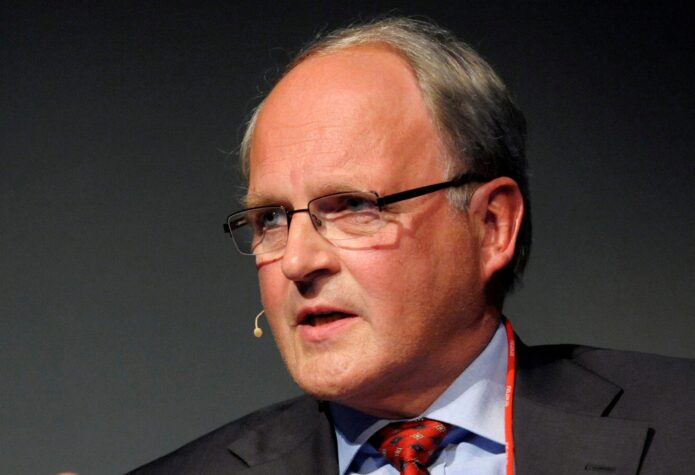
Summary of a conference speech*
The world economy experienced a prolonged period of good and stable growth up to the financial crisis in 2008. This success was, to a large extent, supported by globalisation.
Globalisation created a win-win situation. On the one hand, people in emerging countries were able to participate in the international division of labour and significantly raise their living standards. On the other hand, people in the developed world were able to benefit from high quality products at cheaper prices.
Looking ahead, there are many unknown factors which will shape our future, but we know at least one of them for sure: the openness of markets. Continued openness is by no means certain, so I will discuss a number of related issues.
First, is the industrialised world capable of developing new activities to replace those which are relocated? This will require intensified cooperation across national borders, as R&D inputs are mounting and require volumes to pay off. The challenge is aggravated by the ageing of populations, which in many countries changes the nature of the welfare state. While this has in the past allowed for inclusive education and social stability, and it has in this way been an important contributor to competitiveness, the welfare state is turning into a support system for the passive population.
Also, the EU, which was intended to provide the European business sector with larger markets and strengthen their international position, has not been able to deliver growth. On the contrary, the present crisis shows that there are many unresolved questions as to the division of work and responsibilities between the Member States and the Union. This is a major distraction when efforts should be devoted to strengthening the growth base in Europe.
While there are clear differences between countries and universal conclusions are difficult, it is safe to conclude that the readjustment in the industrialised world will not come about without pain and disruption.
Second, the technological catch-up in emerging countries will at some stage reach its limits. It is difficult to predict how this will impact on growth, and there will no doubt be differences between countries. But the Japanese experiences are in many ways telling. Also, the flow of financial funds to the emerging markets will give rise to financial bubbles. The unwinding of these will cause disturbances to growth, at least temporarily.
Third, do we have the institutions, the knowledge and the willingness to manage the global economy with increased inter-linkages? Experience shows that we are late in adjusting the power balances to new realities, which severely limits decision making. Experience also shows that we are able to take decisive collective action only in a phase of extreme crisis, as in the autumn of 2008. Moreover, there are numerous examples when good growth has given rise to complacency and collective misjudgement of the situation, the latest example being in the run-up to the financial crisis.
Fourth, are we able to secure the supply of energy and necessary raw materials? This is an area which requires genuine international cooperation, particularly if we are to live up to environmental goals. But it is also an area where national interests continue to supersede the global interest, and it is difficult to see how, following present policies, we will be able to satisfy the global need for energy in general and clean energy in particular.
It is disturbing to note that there are so many potential threats to open markets. Hence, even if successful solutions were to be found for the present acute problems, many more fundamental risks remain. Therefore it is safe to assume that present trends will not continue in the present decade. When countries or areas experience problems at home, they will, unfortunately, not see international cooperation and openness as their main priority. However, the present decade will, to a large extent, be shaped by the ability to cooperate. In particular, countries will have to move from words to action, and counterparties will have to coordinate also their own policies, not only the policies of neighbours.
* The speech was delivered at the conference The Future 2020 arranged on 21 June 2011 in Helsinki by the Finnish Management Consultants Association (LJK ry) in co-operation with Small and Middle Enterprises Foundation (PKT-säätiö), the European Federation of Management Consultancies Associations FEACO and the International Council of Management Consulting Institutes ICMCI.