HELCOM: Full steam ahead for greener shipping in the Baltic Sea
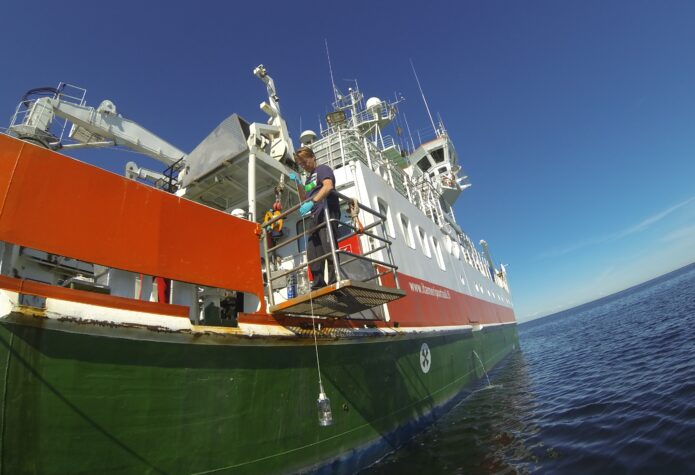
In the Baltic Marine Environment Protection Commission (HELCOM) Ministerial Meeting in October 2013 in Copenhagen, the Baltic Sea countries agreed on new targets for reducing nutrient pollution as part of their efforts to fight eutrophication of the marine environment and follow up on the commitments of the 2007 HELCOM Baltic Sea Action Plan (BSAP).
The meeting also decided on several points to promote greener and safer shipping in the Baltic Sea. Among other things this included the commitment by the countries to create a regional platform for alternative fuels and green technology in the Baltic Sea. Support is taking off fast for the initiative.
Hermanni Backer, the Maritime Professional Secretary at HELCOM, explained to NIB Newsletter how these Copenhagen decisions on shipping have already sparked some follow-up actions.
“Excess nutrients—phosphorus and nitrogen to be precise—cause eutrophication, which is a major environmental problem of the Baltic Sea. These come from a multitude of sources, mainly from activities on land, but also at sea. As an example, exhaust gases from shipping in the Baltic contributes annually over 13,000 tons of airborne nitrogen deposited directly in the sea. This is naturally not the biggest source overall – but not a negligible one either as it is close to the land based airborne emissions contribution from entire countries like Russia or Sweden”, says Backer.
As one step to reach the new reduced nutrient pollution targets, the Platform for alternative fuels and green technology in shipping was launched early this year, in January 16th, in an event organized by Finland, having the Presidency of the Council of the Baltic Sea States, and HELCOM, together with in cooperation with the Baltic Development Forum and the Northern Dimension Partnership on Transport and Logistics. The idea is to bring together shipping and ports communities and financial experts; policy makers, administrations, research and development representatives as well as all the various regional organisations working with various sections of this complex issue.
“We already have good examples of this kind of cooperation in the region, which can be used as a source of inspiration for region-wide cooperation called for by the Ministers in 2013. One of these is the Swedish industry led Zero Vision Tool cooperation, which has already generated several concrete pilots in green shipping. In the Russian Federation the recent work under the St Petersburg Initiative indicates that green shipping can potentially progress with an explosive speed in the region if the industry and administrations see the opportunities and join forces.”
The Baltic Sea is naturally a winner through reduced pollution but the development, introduction and use of new green technological solutions will also create new business opportunities in the region.
“Enhanced regional cooperation on alternative fuels and green technology for ships is potentially a golden opportunity for this region which has always been strong in developing and using cutting edge maritime technology,” says Backer.
Besides launching the Platform itself the January event also brainstormed a joint set of concrete steps to speed up the use of green technologies for shipping in the Baltic. These ideas have been introduced to the Green Technology and Alternative Fuels—Draft Roadmap, which has since January been further discussed during a dedicated event in April in St Petersburg and will likely also be considered during the Baltic Sea Days in Turku in June. The document is still open for comments and logos of interested actors, and is available in both English and Russian here.
In past few years, NIB has financed several projects that will improve the health of the Baltic Sea’s marine environment. Among projects have been the Northern Tunnel Collector—a 12-kilometre sewerage mains system—that was launched in St Petersburg, Russia. The tunnel enabled the volume of wastewater treatment to increase in the city to 98%, which was a significant change to previous practices where substantial volumes of untreated sewage ended up in the River Neva and the Gulf of Finland. NIB has also funded several other wastewater treatment projects in the cities of Tallinn, Helsinki, Vilnius, and Petrozavodsk in northwest Russia, as well as in the cities of Grodno and Brest in Belarus.