From fisheries to ferrosilicon – The project behind NIB’s first loan application
Fifty years ago, Icelandic Alloys became the first company to apply for a loan from NIB. Documents submitted to the Bank’s Board in 1976 reveal how the ferrosilicon producer presented the project and its role in Iceland’s drive to develop new export industries.
In August 1976, NIB’s Board met in the Bank’s newly opened offices in Helsinki to review Icelandic Alloys’ loan application for the construction of a new production plant.
In the 1970s, Iceland was looking to diversify its economy, which had long depended on fisheries and fish exports. Policymakers saw the country’s abundant hydropower and geothermal resources as an opportunity to build new export industries and reduce reliance on a single sector.
As part of this effort, Icelandic Alloys planned to build a ferrosilicon plant at Grundartangi, on the shores of Hvalfjörður in western Iceland. At full capacity, the plant was expected to produce up to 50,000 tonnes of ferrosilicon annually, a key raw material used in steelmaking. Annual electricity consumption was estimated at 500 GWh, equivalent to more than a fifth of Iceland’s total power generation at the time.
Union Carbide pulls out – Elkem steps in
The project faced a setback in 1976 when Union Carbide, an American chemical company, which co-owned Icelandic Alloys with the Icelandic state, withdrew due to concerns about the ferrosilicon market.
The Icelandic authorities subsequently turned to Norwegian industrial group Elkem-Spigerverket, which agreed to acquire a 45% stake in the company.
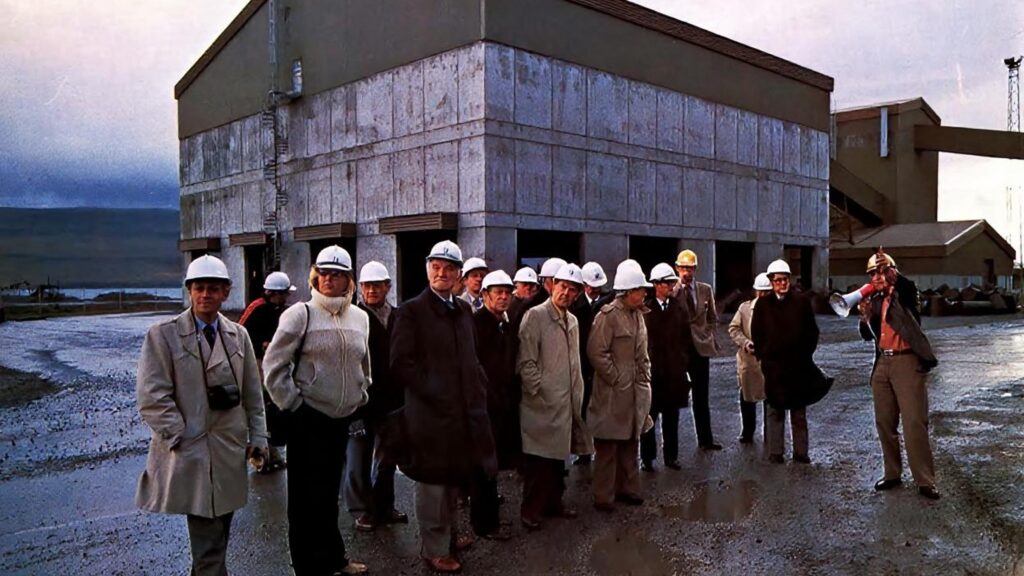
Eventually, the first furnace became operational in 1979. The plant created more than 100 direct jobs, as well as indirect employment through construction, transport, maintenance services, contractors and suppliers.
“The establishment of the ferrosilicon plant at Grundartangi was a landmark moment in Iceland’s industrial development. At the time, Iceland was taking some of its first major steps towards building a modern energy-intensive industrial sector,” says Steinar Birgisson, Production Manager, Elkem Iceland.
Financing the project
The project’s total capital requirement was estimated at around NOK 500 million. Icelandic Alloys identified NIB as its primary source of long-term financing, while additional funding was expected from other lenders.
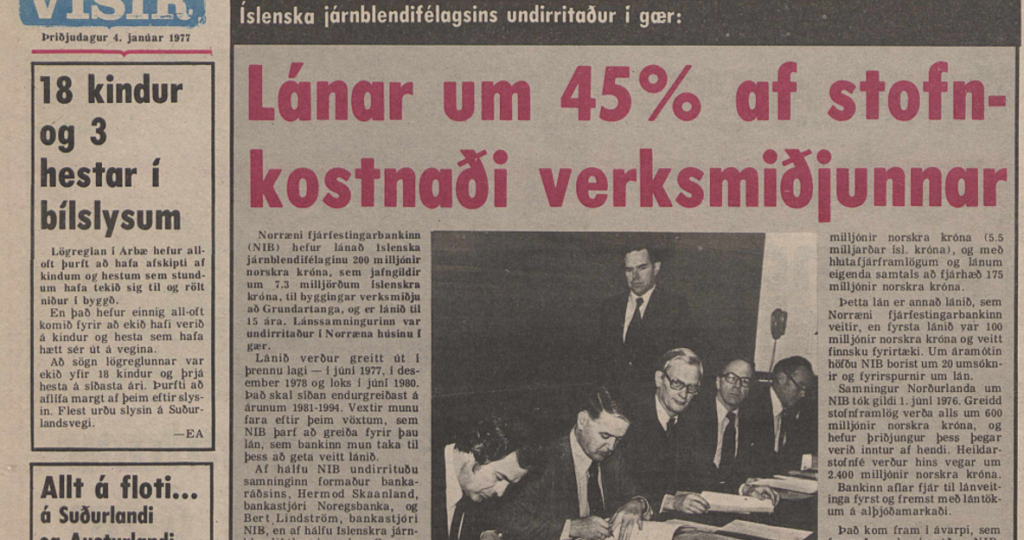
NIB’s Board ultimately approved a USD 9.5 million loan with a maturity of 15 years. The loan was eventually disbursed in June 1977, making it the second NIB loan to be disbursed. The first loan was disbursed to Finnish power company Imatran Voima in December 1976 to finance the construction of a power cable between Finland and Sweden.
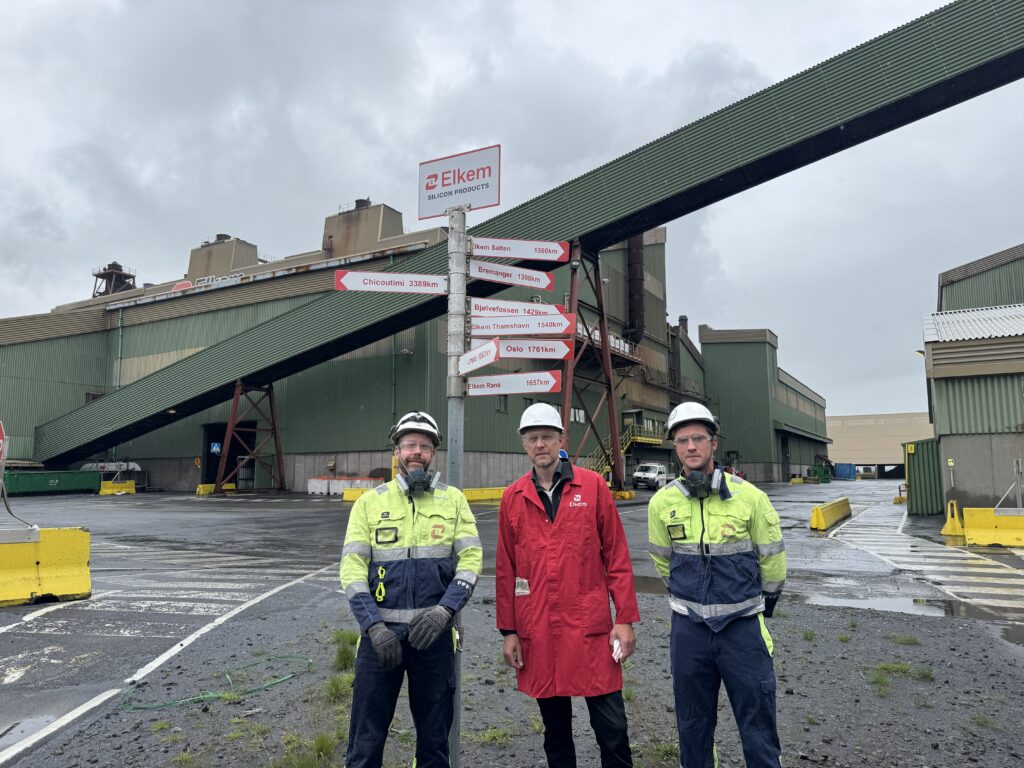
In 2003, Elkem ASA became the sole owner of Icelandic Alloys and in 2008 the company changed its name to Elkem Iceland.
Impact on Island’s economy
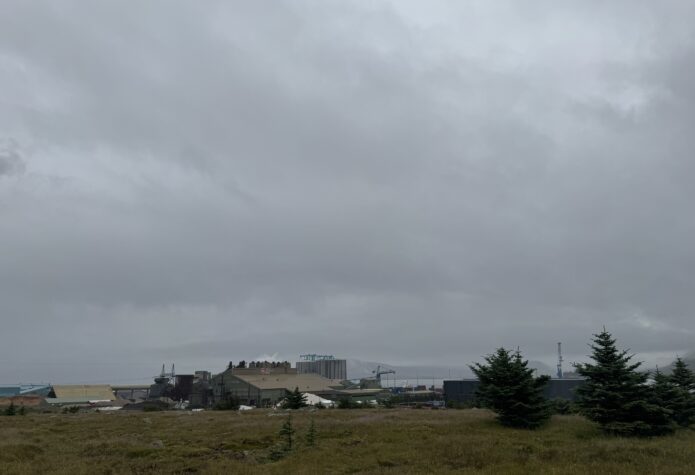
The views are second to none as we drive north from Reykjavík towards Elkem Iceland’s plant at Grundartangi, some 40 kilometres from the capital. Contrary to the image often associated with heavy industry, the surroundings are, as is often the case in Iceland, remarkably scenic. Even on a rainy day, the mountains and rugged coastline create a picture-perfect backdrop for the plant, which has stood here since operations began in 1979.
Although the location is the same, Elkem Iceland has changed over the decades. It employs around 170 people and supports approximately 300 contractors, subcontractors and partners. Elkem purchases goods and services worth around ISK 7.5 billion annually, making a significant contribution to the local economy.
The careers at the company tend to be lengthy, as hands-on experience is crucial. Many operators begin without specialised education but gradually build up expertise through practical work, proceeding to becoming specialists.
“Looking back, the project was not only significant because of the jobs and export revenues it created, but because it helped prove that an energy-intensive industry could become a sustainable pillar of the Icelandic economy,” Birgisson says.
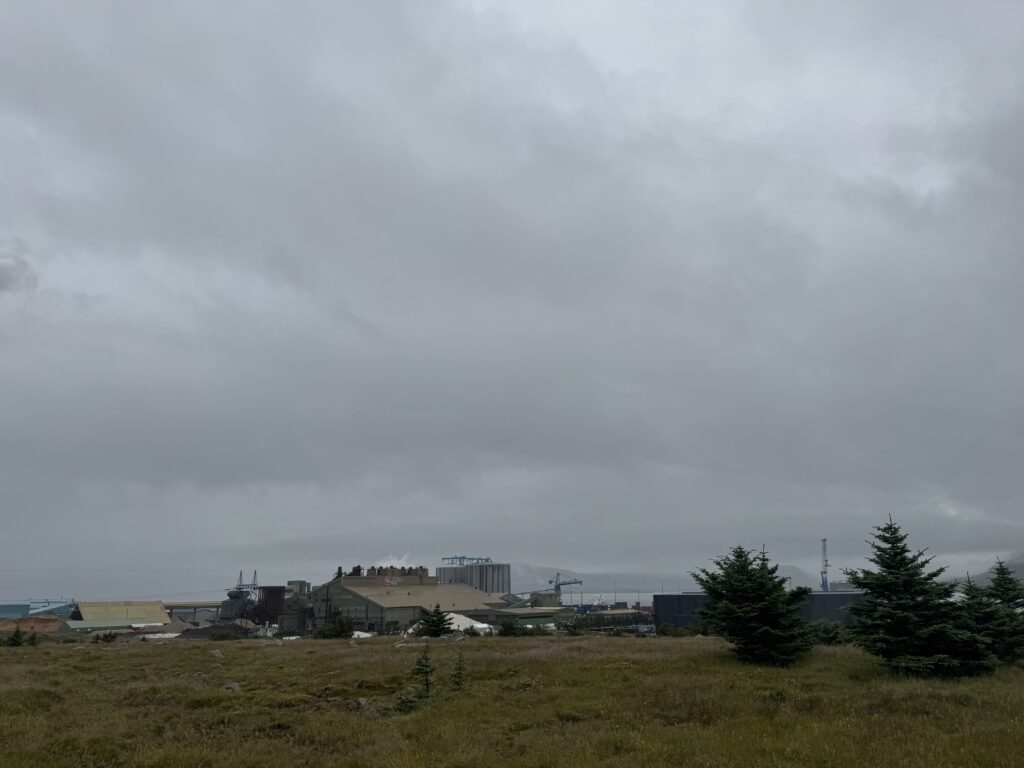
The plant has expanded to three furnaces. A second furnace was commissioned in 1980, followed by a third in 1999, bringing the facility’s total annual production capacity to 120,000 tonnes of ferrosilicon.
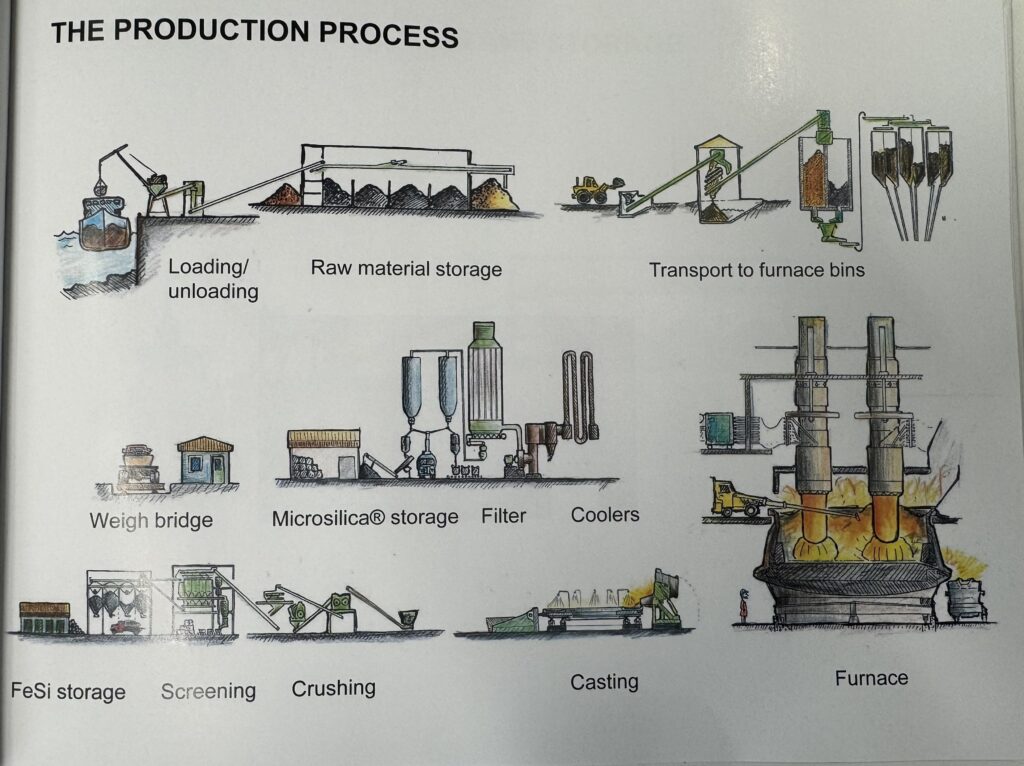
In the furnaces, quartz, iron ore and carbon are heated to high temperatures, causing a chemical reaction that produces molten ferrosilicon, which is then cast, cooled and processed into products for the steel industry.
The basic principle is more than 150 years old. The chemistry remains fundamentally the same, although there have been major advances in safety, efficiency and process control.
“The biggest change has arguably been the shift from volume to specialisation,” says Birkir Guðmundarson, Business Development Manager, Elkem Iceland.
Around 50% of production goes to electrical steel, products which are ultimately used in generators, electric motors and energy infrastructure, for example. The remainder of the production is mainly used in stainless steel and other specialised applications.
Why Iceland?
Although Iceland, in the middle of the North Atlantic, is a long way from the major markets, the country offers one advantage that outweighs the challenges of distance: abundant renewable energy. Its location on the Mid-Atlantic Ridge provides access to geothermal resources, while glaciers and rivers support extensive hydropower generation.
According to the Government of Iceland, around 74.5% of Iceland’s electricity comes from hydropower, and 20% from geothermal energy. Heavy industries dominate total electricity use.
Elkem Iceland transports its raw materials from all over the world. Despite being in the North Atlantic, good shipping connections and shipping facilities make transport conditions favourable.
“Iceland’s industrial development has been built on abundant renewable energy. In a sense, energy is exported through value-added industrial products. Raw materials are imported, transformed using renewable electricity and then exported as finished products,” Guðmundarson says.
Looking ahead
Looking to the future, a big theme for Elkem Iceland is decarbonisation. CO2 emissions are an intrinsic part of ferrosilicon production, as carbon is required in the chemical process. The annual CO2 emissions are 450,000 tonnes, accounting for 10% of Iceland’s total emissions.
However, Elkem benefits from renewable electricity and increasing use of biocarbon, resulting in lower emissions than many international competitors. The company’s goal is to align with the Paris Agreement and achieve fully carbon-neutral production globally by 2050. Elkem Iceland is piloting a project to capture and permanently store CO2 underground in Iceland’s basalt geology.
The ferrosilicon market is highly cyclical and has been facing challenges for roughly the last three years. The period since Covid-19 and the war in Ukraine has been marked by exceptional volatility, with both high and unusually low prices. In addition, trade restrictions have played their own part in the market’s development. A certain volume can be imported into the EU without restrictions, after which tariffs apply. Elkem has therefore had to redirect some sales to other markets.
Despite the current challenges, Elkem sees strong long-term opportunities in electrical steel, which is expected to benefit from growing demand linked to electrification and the energy transition.
In July 2026, NIB signed a NOK 750 million 10-year loan agreement with Elkem ASA to finance R&D investments during 2025–2029. Elkem Iceland is a subsidiary of the company.