Ambassador Norrback: Baltic Sea needs political commitment
The Baltic Sea Action Plan (BSAP) has been set up to restore the good ecological status of the Baltic Sea environment by 2021.
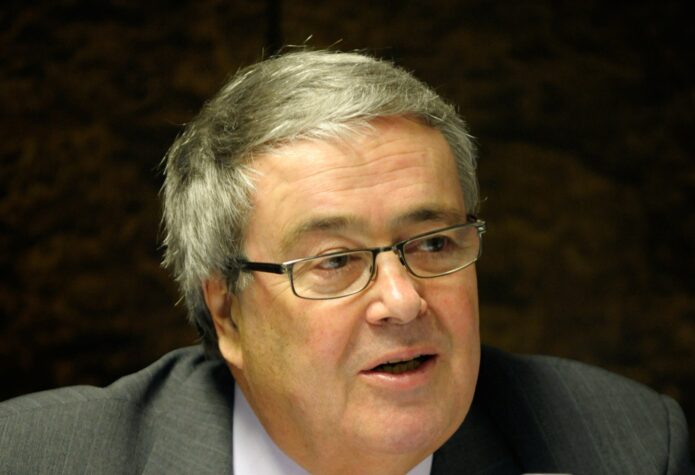
In March 2008, Finland’s former ambassador for Baltic Sea region issues, Ole Norrback, was elected Chairman of the steering group for the implementation of BSAP.
“The need for action has been defined by the current state of the Baltic Sea. Our response to this is innovative: it is based on a clear set of ecological objectives. They reflect a jointly agreed vision of a healthy Baltic Sea,” said Ambassador Norrback in a recent interview for the NIB Bulletin.
New approach
Previous efforts of the Baltic Marine Environment Commission (HELCOM) have brought about noticeable improvements in many areas. HELCOM has already achieved a 40% reduction in nitrogen and phosphorus discharges (from sources in the catchment area) and a 40% decrease as regards emissions of nitrogen to the air, as well as halved the total discharges of about 50 hazardous substances. Now people can bathe on beaches that were once polluted. Some endangered wildlife populations are gradually recovering.
“Still, certain problems such as inputs of nutrients that are responsible for eutrophication can only be dealt with in a large-scale multilateral programme. Inputs of nutrients have been reduced at major point sources, such as sewage and wastewater treatment plants. But further reduction will be a tougher task. For example, it requires abating run-off from overfertilised agricultural lands,” Ambassador Norrback explained.
“The plan is an attempt to implement an ecosystem approach as outlined in many international documents adopted since the 1992 Rio Declaration. This is an excellent new tool also for HELCOM,” he added.
Priorities and stakeholders
The plan identifies scientifically based priorities: combating eutrophication, curbing inputs of hazardous substances, ensuring maritime safety and response capacity to accidents at sea, and halting habitat destruction and the ongoing decline in biodiversity.
“Eutrophication is perhaps the most difficult part of all. It will take decades for the sea to recover from this disease,” Ambassador Norrback explained. He also emphasised political will as an essential prerequisite for introducing common rules for safer maritime practices.
Fortunately, BSAP has many committed stakeholders, including governments, industry, and NGOs, working hard towards the common goals.
“The governments are the primary actors. Also international organisations, such as the Nordic Council of Ministers and the EU, are in a key position to advance the Action Plan,” Ambassador Norrback commented.
He acknowledged the role of financial institutions such as NIB and NEFCO in implementing many environmental projects in the Baltic Sea region: “NIB has done an excellent job of supporting the process financially and pushing the projects forward.”
Model for the EU
According to Ambassador Norrback, BSAP can serve as a model framework for addressing complex problems of a similar type and scope.
“In developing a strategy for the Baltic Sea region, the EU is set to use the action plan as a pattern for what they are planning to do in the environmental sector. As we see, others regard us as forerunners, and now it’s up to us whether we are able to keep up the pace while implementing the plan,” he concluded.