2 August 1976: First capital shares are transferred to NIB
The bank opens for business
Monday 2 August was the rainiest day of summer 1976 in Helsinki. Water streamed down the streets as the NIB team hurried to the office that morning. It was a very special day: the first capital shares were to be transferred to the new organisation’s accounts, marking the bank’s official opening.
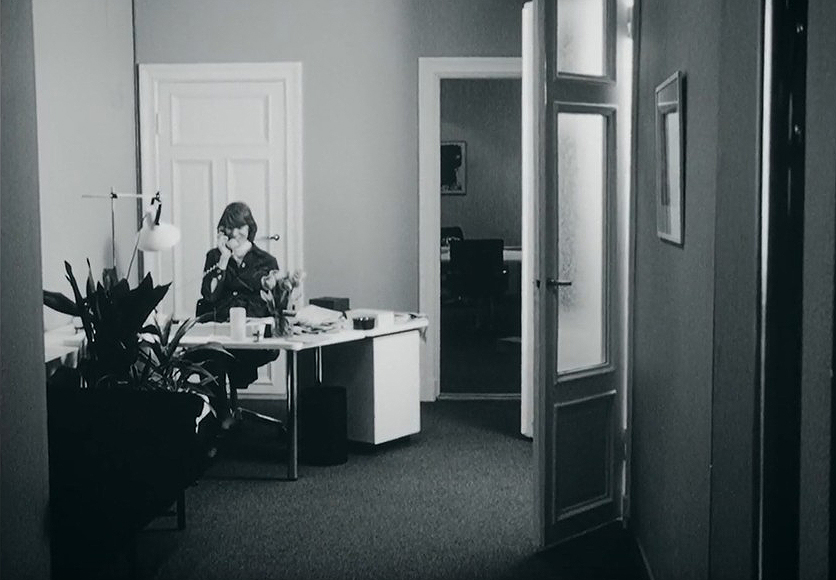
It was also the first day on the job for the bank’s newly appointed General Manager, Bert Lindström from Sweden. At the office on Mannerheimintie 16, he was greeted by the bank’s first employees: a set-up coordinator, two secretaries and a chauffeur.
The task for the day was to transfer the first subscribed capital shares from the five owner countries safely into NIB’s accounts. In line with the statutes, 25% of the bank’s total subscribed capital of SDR 400 million was to be paid in three equal instalments after the bank’s opening.
“A dramatic affair”
Among NIB’s pioneering team that summer was Barbro Eriksson, who had just finished her studies in international finance and joined the bank as a secretary. She retired from the bank in 2012 but still remembers those early days vividly.
“Those were some of the best times of my career,” Barbro says with a smile. “We were a fantastic and enthusiastic team, and our Managing Director was a real creative spark. Everything we did was new, and we had to figure it all out ourselves.”
Barbro also remembers the capital transactions.
“It was quite a dramatic affair! All communications were handled by telex, and what made the transfers even more complicated was that NIB’s capital was denominated in SDRs (Special Drawing Rights).”
The SDR is not a currency but an international reserve asset whose value is based on a basket of different currencies. For NIB, using SDRs signalled an international outlook and avoided favouring the currency of any owner countries. At the same time, it also protected the bank against exchange rate fluctuations.
Setting up the business
The first payments to NIB also included an advance of 250,000 markka from Finland to cover the administrative and inventory costs of equipping the office. And for the small team, there was no shortage of practical tasks. In its first year, the new bank planned to recruit 12–14 employees, while at the same time working intensively on making itself known in the financial community and among potential customers and investors.
“We published numerous press releases and arranged seminars, road shows and receptions,” Barbro Eriksson recalls. “As it turned out, the new bank attracted considerable interest from our target groups from the very start.”
By the end of 1977, NIB’s staff had grown to 18, and 15 loans had already been granted — a promising start for a bank that only a year earlier had existed mostly on paper.